Crocosaurus Cove
Crocosaurus Cove
In the heart of Darwin, Crocosaurus Cove brings together over 70 Australian reptile species and offers close encounters with saltwater crocodiles.
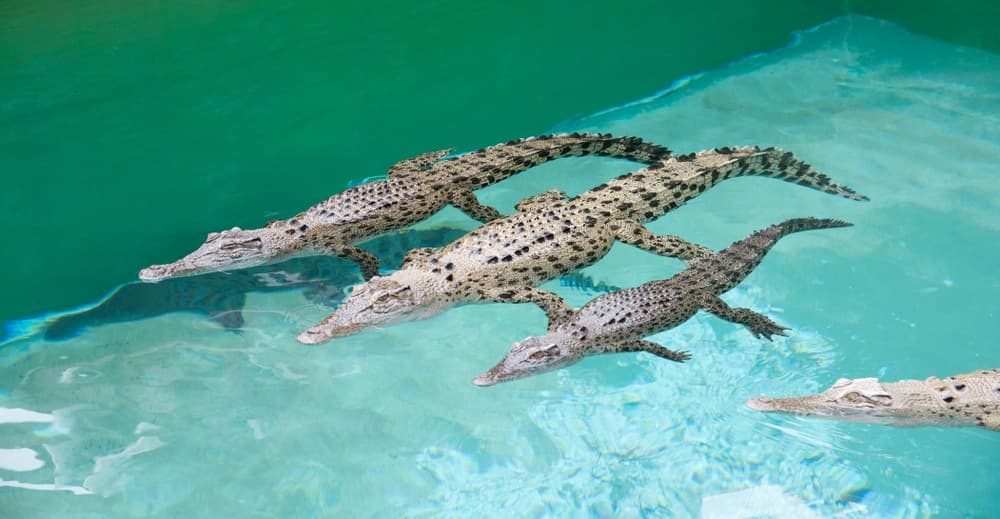
In the center of Darwin, Crocosaurus Cove assembles the iconic reptilian fauna of the Australian Top End around an educational experience. The park houses over 70 species of Australian reptiles, including some of the largest saltwater crocodiles ever kept in captivity, and offers several formats for close-up observation.
Why visit Crocosaurus Cove
The site combines three rarely unified approaches: an urban wildlife park accessible on foot from the city center, immersive observation experiences (including the famous Cage of Death) and a visible breeding program on-site. The birth of young saltwater crocodiles from the pair Kate and William in 2022 illustrates this conservation focus.
For a traveler passing through Darwin, it's the most direct option for understanding the role of the saltwater crocodile in the tropical northern ecosystem, without organizing a trip to the wild.
A recent history marked by Burt
Crocosaurus Cove opened its doors in 2008. Its most famous resident was Burt, a saltwater crocodile captured in the 1980s and made famous by his appearance in the film Crocodile Dundee. Burt continued to attract media attention over the decades, notably during the 2018 World Cup when he was asked to make predictions. He passed away in 2024 at approximately 90 years old, after exceptional longevity for the species.
The park is also distinguished by the presence of the Oenpelli python, one of Australia's rarest snakes, and by its breeding efforts for several endangered species.
What to see and do here
Guided experiences
- Cage of Death: glass cabin submerged in a saltwater crocodile pool, with short sessions every 30 minutes during the day. Restricted to ages 15 and up, by reservation.
- VIP Tour: guided tour in small groups (2 to 8 people) lasting approximately 1.5 hours, with behind-the-scenes access, feeding an adult crocodile and time in the Reptile House. Two departures daily.
- Whiptail stingray encounter: session limited to 4 participants in mid-afternoon, accessible from age 10, supervised by a handler.
- Junior Reptile Ranger: program for children ages 7 to 12 during Northern Territory school holidays, focused on the role of animal handler.
The animal collection
Beyond crocodiles, the park presents a wide range of northern Australian species:
- Lizards and dragons: frilled-neck lizard, bearded dragon, blue-tongued skink, velvet gecko, perentie
- Snakes: carpet python, taipan, death adder (venomous species are displayed behind glass panels)
- Freshwater turtles: long-necked turtle, pig-nosed turtle
- Tropical Top End fish: barramundi, archer fish, sawfish, saratoga
- Amphibians: tree frogs and cane toads in vivariums
Practical information
Address: 58 Mitchell Street, Darwin City NT 0800.
Duration of visit: allow 2 to 3 hours for a general tour, longer if you combine a guided activity.
Admission: general entry is mid-range for an urban wildlife park; special experiences (Cage of Death, VIP tour, stingray encounter) are charged as extras, in a higher price range. Family tickets are available. Check the official website for current rates before your visit.
What to bring: for the Cage of Death, a liability waiver must be signed; arrival is recommended 30 minutes before your reserved time slot. Cancellations must be made at least 72 hours in advance.
When to visit
- Dry season (May to October): the most comfortable period in Darwin, with moderate heat and low humidity. This is the preferred time to visit.
- Wet season (November to April): high heat and humidity, frequent tropical showers. The park remains open and crowds are lighter.
To avoid crowds, aim for opening in the morning or late afternoon, which also coincides with the stingray encounter.
How to get there
- On foot: Crocosaurus Cove is located on Mitchell Street, the main thoroughfare in Darwin's city center, accessible from most hotels in the area.
- Public transport: Darwin Interchange, the city center bus hub, is a 2-minute walk away.
- By car: from outside Darwin, take the Stuart Highway then head toward Mitchell Street.
- Parking: paid parking nearby at Mitchell Centre, Chinatown Car Park and along Cavenagh Street.
In the surrounding area
Crocosaurus Cove fits into a stay in Darwin, gateway to the Top End. To further explore Australie, several sites offer interesting contrast with the tropical climate of the north:
- Atherton Tablelands: volcanic plateau in tropical Queensland, rich in waterfalls and endemic wildlife.
- Blue Mountains: sandstone massif west of Sydney, listed as a World Heritage site.
- Australian Museum: essential reference for understanding Australian fauna and Aboriginal culture.
Frequently asked questions
Frequently asked questions
The activity is accessible from age 15, with parental consent for minors. A liability waiver must be signed on-site.
Allow 2 to 3 hours for a general tour of the park. If you add a guided activity such as the VIP Tour (1.5 hours) or Cage of Death, plan for a half-day.
Yes, Crocosaurus Cove remains open year-round, including during the wet season (November to April). Crowds are generally lighter during this period.
General admission does not require a reservation, but guided experiences (Cage of Death, VIP Tour, stingray encounter) have limited group sizes and must be booked ahead of time.
Yes, the park is family-friendly. Children can participate in the VIP Tour from age 4 (accompanied), the stingray encounter from age 10, and the Junior Reptile Ranger program between ages 7 and 12 during Northern Territory school holidays.
Preparing your trip
Crocosaurus Cove is a natural stop on a Top End itinerary, to be combined with Kakadu National Park or Litchfield. To build a tailor-made trip incorporating Darwin and other regions, consult our Australie trips.

Interested in this visit?
We can include it in your personalised itinerary.