Gordon River
Gordon River
UNESCO-listed river in western Tasmania: cruises from Strahan, Sarah Island penal settlement, temperate rainforest and ancient Huon pines.
The Gordon River winds through a remote region of western Tasmania, listed as a UNESCO World Heritage site. Its dark waters snake through a temperate rainforest, between forested mountains and narrow gorges, from the centre-west of the island to Macquarie Harbour, near the small port town of Strahan.
This river represents one of the most emblematic gateways to the Tasmanian Wilderness, a protected area where human impact remains minimal. It is visited almost exclusively by boat, departing from Strahan, as part of full-day cruises that combine nature observation with historical stops.
Why visit the Gordon River
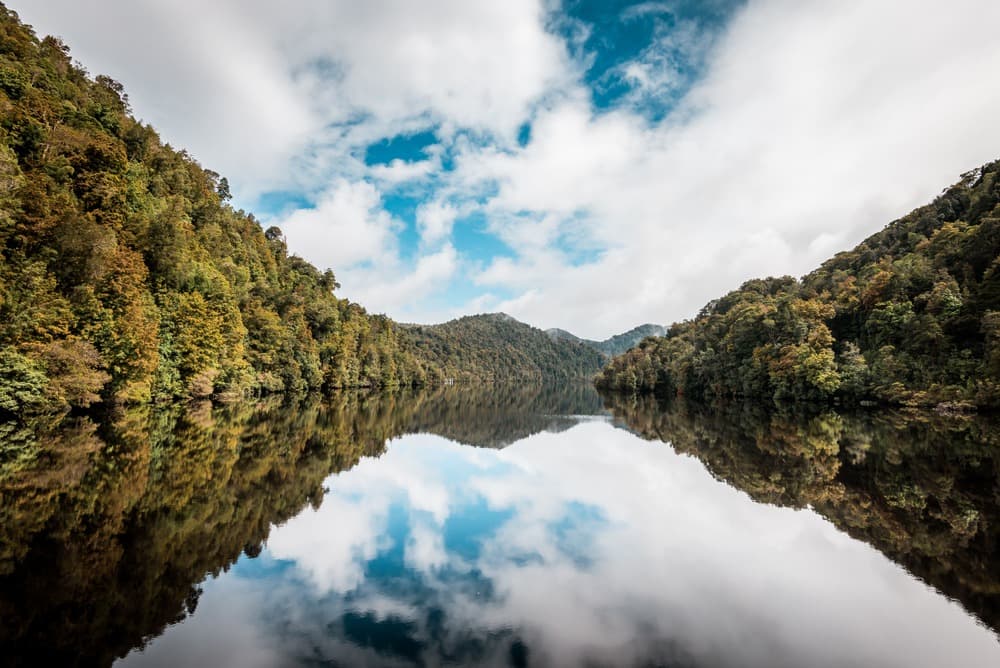
The river offers a microcosm of what makes western Tasmania unique: pristine temperate rainforest, endemic biodiversity and penal history. Its water, naturally tinted by tannins from decomposing vegetation, takes on a dark brown colour that reflects the canopy like a mirror when the wind drops.
It is also an ecologically significant site: in the 1980s, mobilisation against a hydroelectric development project intended to submerge part of the valley resulted in Australia's first major environmental victory. This episode remains a landmark in the country's environmental history.
History: Sarah Island and Macquarie Harbour penal settlement
Sarah Island, located at the entrance to Macquarie Harbour, housed a penal colony built in 1821. Isolated by the turbulent waters of Hell's Gates and impenetrable forests, it served to imprison the most difficult prisoners sent from other Australian colonies. The humid climate, the severity of the regime and the remoteness made it one of the most feared prisons in the country.
The island also housed a rudimentary shipyard where boats were built from Huon pine, an endemic Tasmanian timber remarkable for its water resistance. Some living Huon pine specimens exceed 2,000 years old, making them among the oldest trees in the Southern Hemisphere. The remains of the penal settlement and shipyard can still be visited today during a guided stop.
What to see along the river
Landscapes and wildlife
- Temperate rainforest: tree ferns, mosses, ancient Huon pines
- Gordon Splits: narrow gorges long considered impassable, upstream of the navigable section
- Wildlife: giant kingfisher, Tasmanian eagle, occasionally platypuses on calm riverbanks
- Black water: the dark tint, caused by tannins, creates perfect reflections in calm conditions
Typical cruise stops
- Passage through Hell's Gates, the narrow strait connecting Macquarie Harbour to the ocean
- View of Ocean Beach, Tasmania's longest beach
- Stop on Sarah Island with guided tour of the penal settlement ruins
- Silent passage upriver to a landing point allowing a short walk into the forest
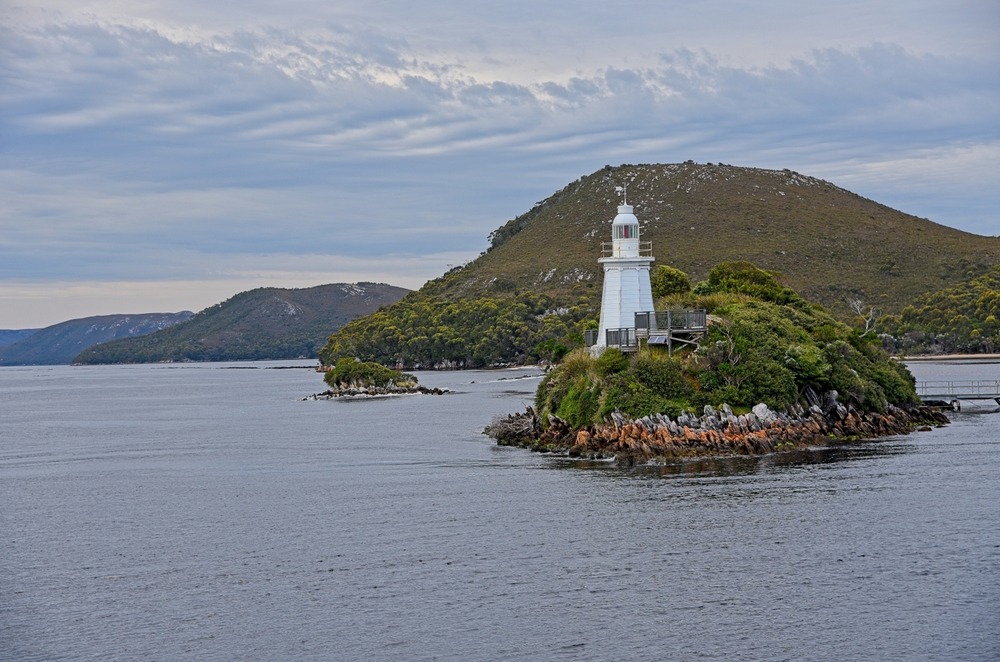
- Depending on the cruise option: passage near Bonnet Island, which hosts a little penguin colony
Practical information
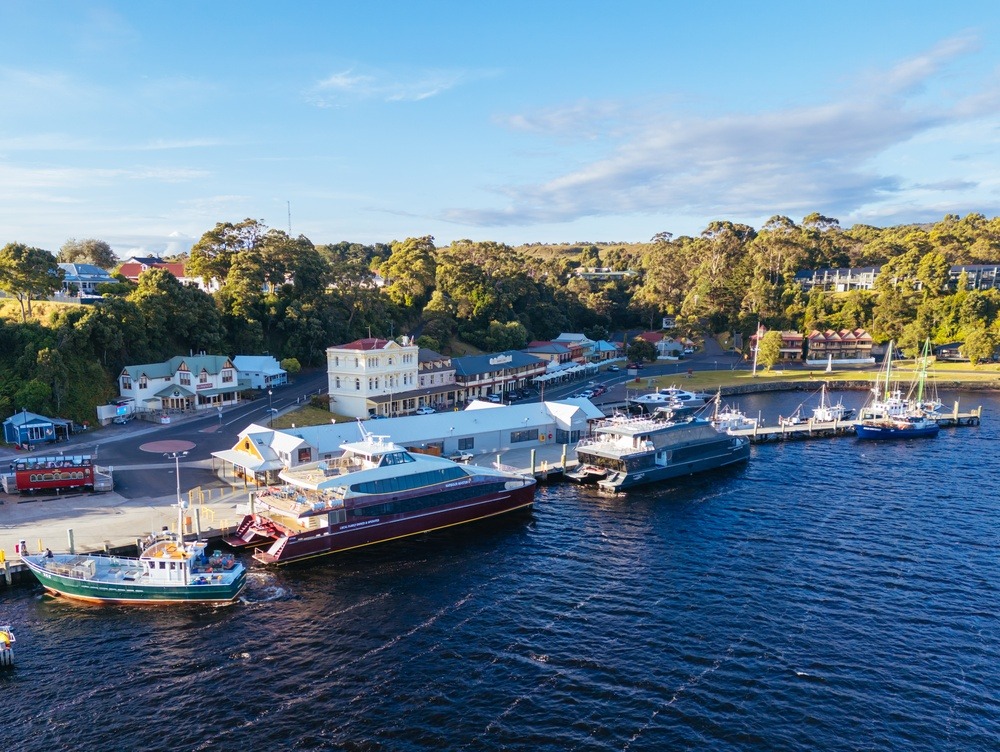
Cruises depart from Strahan at the Gordon River Cruises terminal located at 24 The Esplanade. Several operators offer half-day or full-day outings, usually with on-board meals and audio commentary in multiple languages. Prices vary depending on the class chosen (main deck or upper deck). Plan for approximately half a day to a full day depending on the option.
For more active travellers, alternatives exist around the river:
- Seaplane flights departing from Strahan, with landing on the river
- Short walks along the Lyell Highway, such as the Franklin River Nature Trail
- Rafting on the Franklin River, a multi-day sporting expedition reserved for supervised participants
When to go
- Summer (December to February): driest and mildest period, temperatures generally between 15 and 25 °C, best visibility for navigation
- Autumn (March to May): soft light, fewer crowds, first rains
- Winter (June to August): cool and very humid, frequent river mists, more contemplative atmosphere but harsher conditions
- Spring (September to November): rainy transition, high water flow
Western Tasmania is one of Australia's wettest regions: pack waterproof clothing and warm layers year-round.
How to get there
Strahan, the departure point for all cruises, is accessible by car:
- Approximately 5 hours' drive from Hobart via the Lyell Highway
- Approximately 4 hours from Launceston
Public transport is very limited in this part of the island; car rental is highly recommended. Some organised tours from Hobart or Launceston include transfers and cruises for the day or as a two-day package with an overnight stay in Strahan.
Nearby attractions
- Strahan: former timber port, base point for the river and west coast
- Cataract Gorge near Launceston, on the route from the north of the island
- Blue Mountains, another iconic UNESCO site on the mainland
Frequently asked questions
Frequently asked questions
Plan your trip
The Gordon River fits naturally into an itinerary covering Tasmania's west coast and centre. To build a bespoke journey including Strahan and other Australian national parks, consult our trips to Australie.

Interested in this visit?
We can include it in your personalised itinerary.