Kuranda State Forest
Kuranda State Forest
On the doorstep of Kuranda village, this tropical rainforest within the UNESCO World Heritage Wet Tropics can be explored on foot, by Skyrail or train from Cairns.
On the edge of Kuranda village, Kuranda National Park (formerly Kuranda State Forest) extends the Wet Tropics of Queensland, inscribed on the UNESCO World Heritage list. This humid tropical rainforest combines ravines, streams and dense canopy on the foothills overlooking the Barron Valley, less than an hour from Cairns.
Why visit Kuranda State Forest
The forest occupies a strategic position between Daintree National Park to the north and the Atherton Tableland to the west. This ecological corridor allows wildlife movement and harbours several rare plant species from Queensland's tropical coast. Listed within the UNESCO World Heritage Wet Tropics since 1988, the area can be explored on foot via several marked trails from Kuranda village, making it one of the most accessible gateways to the ancient rainforest of northern Australie.
History of the site
The forest is part of the ancestral territory of the Djabugay people, who long travelled the trails connecting the coast to the interior plateaus. In the late 19th century, mining expansion changed the area's use: the Bump Track became a strategic route between Port Douglas and the gold-mining regions inland. The opening of the Kuranda Scenic Railway in 1891 marked a turning point, gradually replacing the mule track.
As mining activity declined, vegetation reclaimed the land. The Kuranda State Forest designation eventually became Kuranda National Park, and the entire area was integrated into the protected Wet Tropics, recognised for their exceptional botanical and cultural value.
What to see and do
Rainforest trails
Several short paths depart from the village and pass through zones of tree ferns, endemic palms and eucalyptus. Some routes lead to streams, others climb towards viewpoints overlooking the Barron Valley. The network suits casual hikers as well as more experienced walkers.
The Bump Track
This former pioneer route connected the coast to the interior plateau during the gold rush era. The trail is now open to walking and mountain biking. The gradient is steady and passes through sections of preserved forest where wallabies can sometimes be spotted at dawn or dusk.
Fauna and flora
Botanical diversity is one of the site's major attractions: tree ferns, endemic palms, eucalyptus and wild orchids succeed one another according to altitude and aspect. For wildlife, wallabies and white cockatoos are regularly observed. Cassowaries are mentioned in certain sections of the Wet Tropics, but sightings near Kuranda itself remain rare. You'll also encounter numerous tropical butterflies and diurnal reptiles.
Multi-use trails
A few trails are open to cycling and horse riding, allowing you to cover more ground between clearings and shaded areas. The terrain remains rolling but can become slippery after rain.
Practical information
- Duration of visit: allow 2 to 4 hours for a short loop, or half a day to combine trails and viewpoints.
- Equipment: walking shoes, water, insect repellent and a light waterproof jacket, especially during the wet season.
- Accessibility: trails are mostly dirt, with some steep sections and exposed roots. Not well suited for pushchairs or wheelchairs.
- Fees: free access to national park trails.
When to visit
The dry season, April to October, offers more moderate temperatures and better trail conditions, making it the easiest time for walking and wildlife watching. The wet season, November to March, intensifies the forest and feeds the waterfalls, but tropical downpours can make some sections impassable. May, June and September offer a good balance between weather, visitor numbers and landscape visibility.
How to get there
The site is accessible from Cairns by several complementary means:
- By car: 35 to 45 minutes via the Captain Cook Highway then Kennedy Highway.
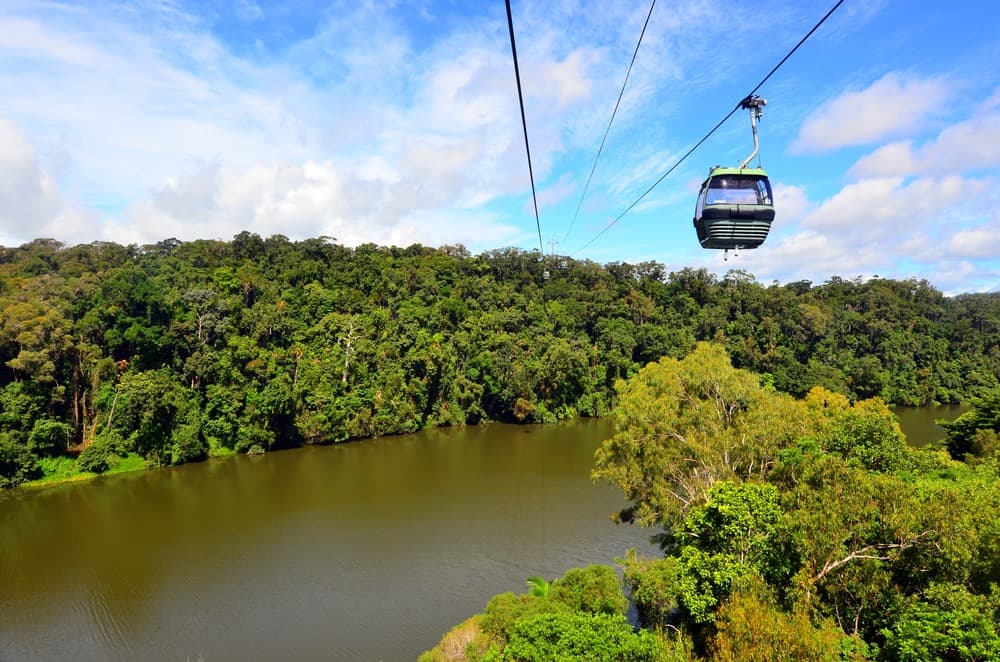
- By cable car: Skyrail connects Smithfield to Kuranda above the canopy, with intermediate stations allowing access to forest walkways.
- By train: the Kuranda Scenic Railway departs from Cairns or Freshwater and crosses the Barron Gorges to the village.
- By shuttle or taxi: daily services from Cairns.
Combining Skyrail on the way up and Kuranda Scenic Railway on the return remains the most popular option to enjoy two different perspectives on the forest.
Nearby
The area integrates easily into an itinerary in tropical Queensland. To the west, the Atherton Tablelands extend the visit with waterfalls, crater lakes and plantations. Further south in the country, the Blue Mountains offer another UNESCO World Heritage forest example, in a very different sandstone plateau register.
Frequently asked questions
Frequently asked questions
Both modes are complementary. Skyrail offers a bird's-eye view of the canopy and allows you to descend at forest stations. The train follows the Barron Gorges with views of waterfalls. The round-trip combination remains most appreciated if time allows.
Half a day is enough for a short trail and a visit to the village. A full day allows you to combine hiking, viewpoints and a Skyrail or train journey.
Wallabies, white cockatoos, tropical butterflies and reptiles are the most common. Cassowaries are recorded in the Wet Tropics but direct sightings near Kuranda remain occasional. It's best to stay quiet and attentive around stream edges.
Yes, several short and accessible trails depart from the village and suit children who can walk. Longer trails and the Bump Track, however, require a better fitness level.
Planning the rest of your trip
Kuranda integrates naturally into a broader itinerary in tropical northern Queensland. To build your programme, consult our suggestions for travel in Australie and adjust the duration according to your interests.
Interested in this visit?
We can include it in your personalised itinerary.