Hinchinbrook Island National Park
Hinchinbrook Island National Park
Off Cardwell, Hinchinbrook Island combines the 32 km Thorsborne Trail, mangroves, deserted beaches and wilderness campsites, with strict visitor quotas.
Off Cardwell on the north-east coast of Queensland, Hinchinbrook Island rises with granite peaks facing the mainland. Almost entirely designated a national park, it encompasses wet tropical rainforest, mangroves, deserted beaches and fringing reefs. Without permanent accommodation or mobile phone coverage, it attracts primarily independent hikers and kayakers drawn to one of Australie's most challenging coastal trails.
Why visit Hinchinbrook Island
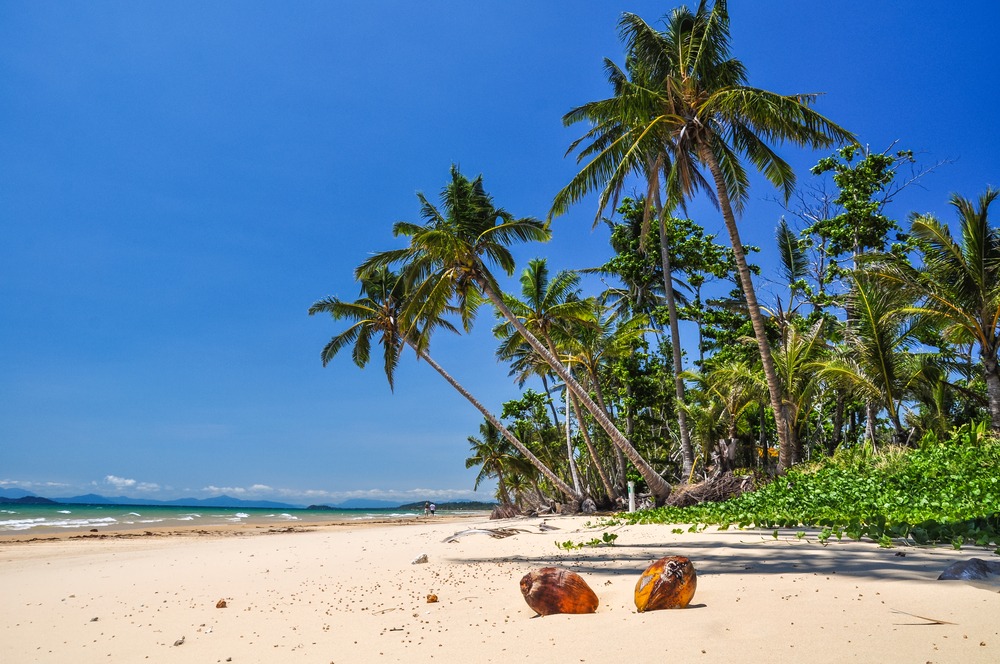
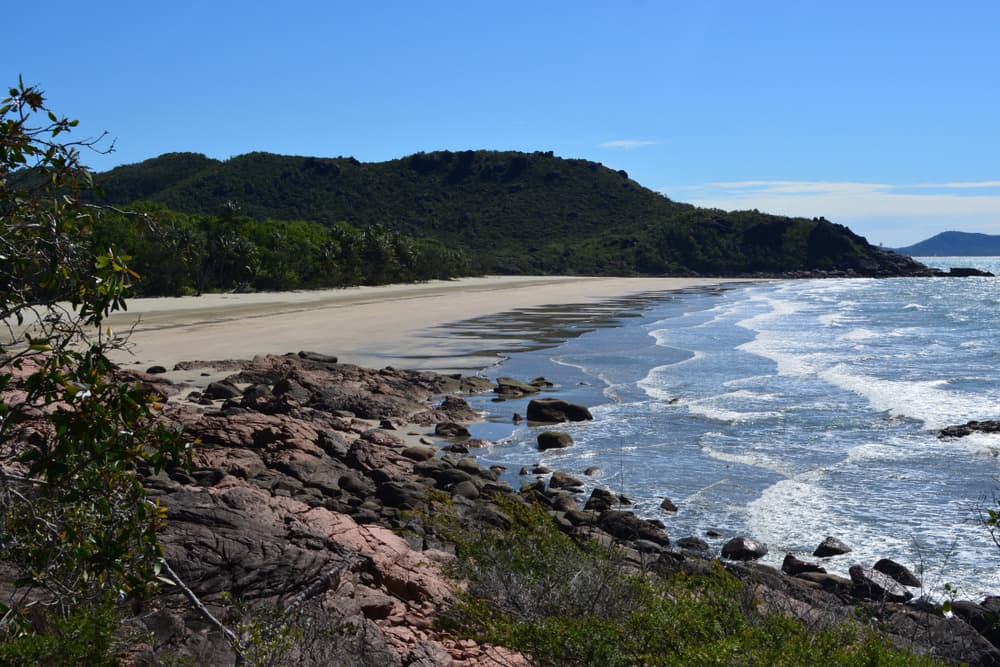
The island is one of the largest islands of the Great Barrier Reef entirely protected as a national park. The contrast is striking: to the west, estuaries fringed with mangroves and mangrove palms; to the east, long open beaches facing the Coral Sea and mountainous terrain peaking near Mount Bowen. This geography supports dense biodiversity, managed jointly by Queensland and local Indigenous communities.
The absence of major infrastructure makes it a destination for camping and walking, with deliberately limited visitation to preserve the environment.
Island history
The island is known as "Pouandai" by the Biyaygiri, its first inhabitants. They practised traditional fishing using stone traps adapted to tidal movements, with some remnants still visible along the shoreline. Contact with European navigators began in the nineteenth century, but the establishment of Cardwell township in 1864 fundamentally disrupted the Indigenous organisation of the region.
The island was subsequently used by settlers for fishing, agriculture and prospecting. Its designation as a national park in 1932 marked a turning point towards conservation. Several notable episodes mark its recent history: the crash of an American bomber in 1942, linked to Pacific operations, and the uncovering in 2011 of an ancient wreck, which rekindled archaeological interest in the coastal waters.
What to see and do
The Thorsborne Trail
The island's signature route, the Thorsborne Trail runs along the eastern coast for 32 km, typically completed in 4 days. It traverses dense forests, waterfalls, beaches and mangroves. Complete self-sufficiency is required: no shelters, only rustic campsites across seven official zones. To limit environmental pressure, hiker numbers are capped at 40 simultaneously on the trail, requiring bookings well in advance with Queensland Parks.
Camping and bivouacking
Campsites are accessible on foot or by boat depending on location. Sites such as Macushla and Haven Camp Area depend on tides for landing, which determines transfer schedules. The absence of light pollution enables excellent night sky observation.
Kayaking and coastal navigation
Hinchinbrook Channel, separating the island from the mainland, suits paddling: sheltered coves, mangroves, estuary arms. Several operators offer guided outings from half-day to multi-day, accessing sections less accessible on foot.
Wildlife and observation
The island is home to over 60 bird species and around twenty recorded butterfly species. Surrounding waters are frequented by dugongs, turtles, dolphins, crocodiles and barramundi. Local fishing remains governed by a sustainable management tradition inspired by the Bandjin, the Indigenous people of the nearby coast.
Shorter walks
For visitors not undertaking the Thorsborne, climbing Nina Peak offers a shorter walk with coastal views. Several operators based in Cardwell organise day transfers to the island's northern sections.
Practical information
- Permits: walking the Thorsborne and bivouacking require a Queensland Parks permit, to be booked well in advance given the quota.
- Equipment: complete water self-sufficiency (filterable on-site), food, shelter and hiking gear suitable for wet terrain.
- Connectivity: no mobile network on the island. Plan for an emergency beacon for multi-day itineraries.
- Accommodation: no hotels or lodges on the island, only official campsites.
When to visit
- Dry season (April to September): the most favourable period, cool and dry climate, minimal rainfall. Conditions suit hiking, camping and kayaking.
- Wet season (November to March): abundant rain, heavy heat and cyclone risk. Several trail sections may be impassable and boat transfers are frequently cancelled.
How to get there
Access is by boat only, from two main mainland points:
- Cardwell: transfers to the island's northern section, just kilometres offshore.
- Dungeness, near Lucinda: transfers to the Thorsborne Trail's southern end, the classic departure point for the north-south crossing.
Departures depend on tide and weather. It's best to plan a buffer day either side of your stay to anticipate possible delays.
Nearby attractions
The island is part of a network of natural spaces in tropical north Queensland. Several other Australian national parks and islands offer different but complementary environments:
- Maria Island, in Tasmania, another protected island centred on hiking and wildlife observation.
- Phillip Island Nature Parks, in Victoria, for coastal wildlife.
- Cradle Mountain National Park, Australie's alpine trekking benchmark.
- Port Campbell, on the Great Ocean Road, for coastal scenery.
Frequently asked questions
Frequently asked questions
Yes. Walking and camping on the trail require a permit issued by Queensland Parks. With the quota limited to 40 hikers simultaneously, booking several months in advance is advisable, especially during the dry season.
The Thorsborne is typically completed in 4 days and 3 nights, covering 32 km self-sufficiently. Faster walkers can do it in 3 days, but the standard pace allows time to enjoy the beaches and waterfalls.
Tent, sleeping bag, stove, water filter, provisions for the entire stay, clothing suited to tropical rain and hiking boots that handle wet conditions. An emergency beacon is recommended given the complete lack of network coverage.
Yes. Day excursions from Cardwell allow access to the northern section, beaches and shorter walks like Nina Peak, without multi-day commitment.
Plan your trip
Hinchinbrook Island fits naturally into an itinerary across tropical north Queensland, between Townsville and Cairns. To build a custom trip including this stop or other Australian parks, explore our Australie travel itineraries.
Interested in this visit?
We can include it in your personalised itinerary.