Whitehaven Beach
Whitehaven Beach
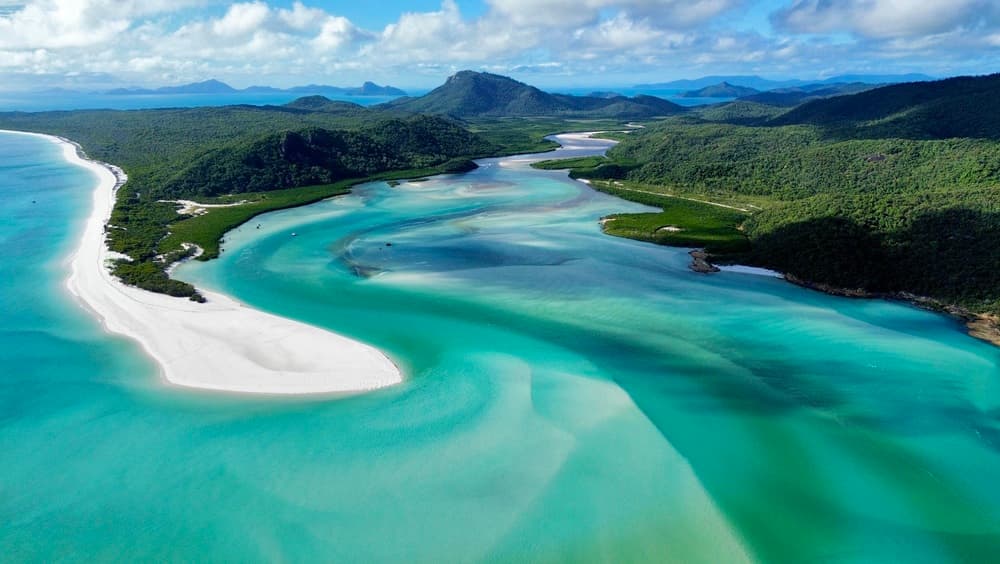
Whitehaven Beach, on Whitsunday Island in Queensland, is renowned for its pure silica sand and the colourful swirls of Hill Inlet. Accessible only by boat or seaplane from Airlie Beach.
Whitehaven Beach stretches for approximately seven kilometres along Whitsunday Island in Queensland, Australie. Its sand is composed of 98% pure silica, giving it a distinctive whiteness and texture—it remains cool underfoot even in bright sunshine. The beach is accessible only by boat or seaplane from Airlie Beach, which preserves its unspoilt character despite its international renown.
Quick practical guide
- Access: boat or seaplane from Airlie Beach (mainland) or Hamilton Island
- Entry: the beach itself is free; boat excursions are charged by the operator
- Recommended duration: half day to full day depending on your choice of tour
- What to bring: swimwear, sunscreen (preferably reef-safe, without oxybenzone to protect coral), hat
- Rules: camping subject to national park permit; campfires prohibited on the beach
- Accessibility: challenging due to natural terrain and lack of fixed infrastructure
What you'll see
The pure silica sand forms ever-changing patterns with each tide. At the northern end of the beach, the Hill Inlet lookout offers views of the swirling white sand and turquoise water that blend according to tidal levels. Tropical vegetation borders the back of the beach. Stingrays and sea turtles frequent the shallow waters.
History and context
The Whitsundays archipelago is the traditional country of the Ngaro people, who navigated between the islands in outrigger canoes. Europeans arrived in the region in the late 18th century. Whitehaven Beach is part of the Whitsundays National Park, managed by Queensland Parks and Wildlife Service, and falls within the Great Barrier Reef, a UNESCO World Heritage site.
Highlights of your visit
Hill Inlet at low tide
The lookout at the northern end of the beach is the most photographed vantage point. At low tide, white sandbars emerge and create abstract patterns in the turquoise water. Mid-morning light is ideal for capturing the colour contrasts.
Swimming in the silica waters
The water is clear and shallow across much of the beach. The fine sand doesn't retain heat, making swimming pleasant even during the Australian summer. Watch for box jellyfish (Chironex fleckeri) in warm months (October to May)—rash guards or wetsuits are recommended.
Snorkelling near the beach
Nearby coral reefs are home to tropical fish, turtles and rays. Some excursions include a snorkelling stop between the beach and neighbouring islands.
Photography tips
Hill Inlet lookout delivers the best shots mid-morning, when the sun is high enough to reveal blue and white nuances without backlighting. Late afternoon brings golden light that flatters the sand. Avoid midday: overhead sun flattens contrast. Drones are subject to regulation within the national park—check permissions with Queensland Parks and Wildlife Service before flying.
Location and access
Whitehaven Beach is located on Whitsunday Island, the largest island in the archipelago, approximately 25 kilometres offshore from Airlie Beach. Airlie Beach is accessible by car from Proserpine (regional airport) or by air via Hamilton Island. From Airlie Beach, operators offer day excursions or multi-day cruises. Hamilton Island also has direct connections to the beach. There are no roads or permanent accommodation on Whitsunday Island itself.
Nearby attractions
- Hamilton Island — inhabited island in the archipelago, frequent departure point for excursions, with international airport.
- Airlie Beach — main coastal town, logistical hub for exploring the Whitsundays.
- Great Barrier Reef (Whitsundays section) — reefs accessible by excursion from the beach or from Airlie Beach.
- Hook Island — neighbouring island renowned for snorkelling and cave exploration.
Frequently asked questions
Australia's dry season, June to October, offers the most stable conditions: clear skies, calm seas and no box jellyfish. The Australian summer (November to April) is warmer and more humid, with cyclone risk and dangerous jellyfish present.
The beach is accessible only by boat or seaplane. Departures are mainly from Airlie Beach or Hamilton Island. Numerous operators offer day excursions or multi-day cruises around the archipelago.
Camping is allowed in designated areas of the national park, but a permit issued by Queensland Parks and Wildlife Service is mandatory. Campfires are prohibited. Places are limited and must be reserved in advance.
Box jellyfish are present in Queensland coastal waters between October and May approximately. Wearing a rash guard or stinger suit is strongly recommended during this period. In the dry season, the risk is very low.
The beach is located within a national park. Drone use is regulated and may require specific authorisation. Check with Queensland Parks and Wildlife Service before your visit.
Choose mineral sunscreens (based on zinc oxide or titanium dioxide) free of oxybenzone and octinoxate, two chemical filters recognised as harmful to coral reefs.
Interested in this visit?
We can include it in your personalised itinerary.