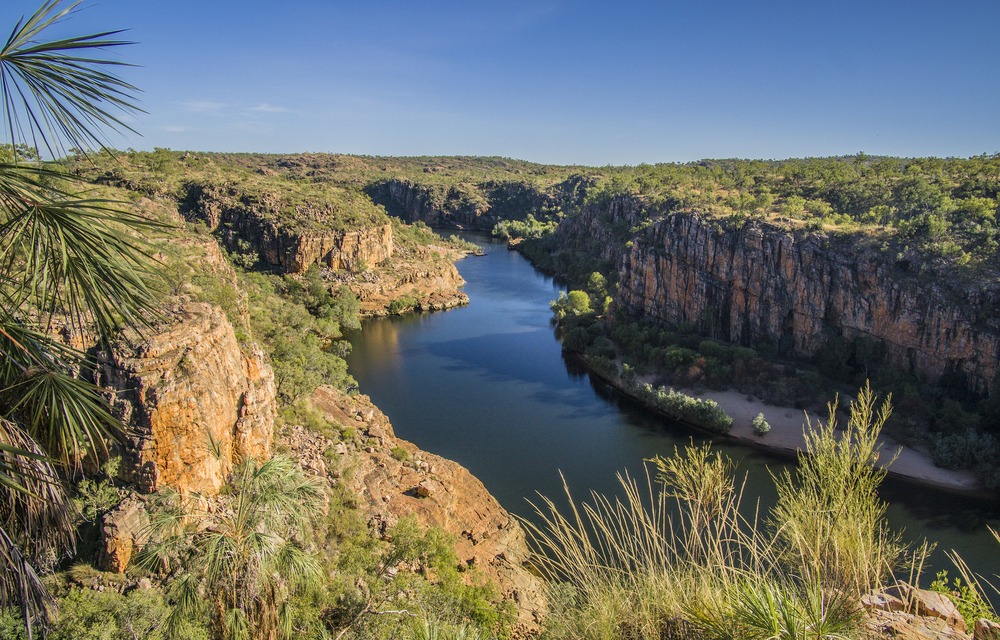
Waterfall Bay
Waterfall Bay
At Waterfall Bay, a waterfall cascades directly into the ocean from dolerite cliffs. This site within Tasman National Park is reached on foot and offers views over one of Australie's most pristine coastlines.
Waterfall Bay is a wild cove on the Tasman Peninsula in Tasmania, where a waterfall plunges directly into the South Pacific Ocean from dolerite cliffs. The site is accessible on foot via the Tasman Coastal Trail, and rewards hikers with views of vertical rock faces among Australie's highest.
Practical information at a glance
- Access: hiking trail from Waterfall Bay car park, on the Tasman Coastal Trail
- Entry: free (Tasman National Park — a national parks Tasmania pass may be required for vehicles)
- Duration: 1.5 to 2 hours return from the car park
- Footwear: hiking boots recommended, rocky and occasionally slippery terrain
- Accessibility: not accessible — unimproved trail
What you'll see
The waterfall drops directly onto the rocks below before meeting the sea — a rare and visually striking spectacle. The dolerite cliffs framing the bay rise to considerable heights. Offshore, you'll frequently spot dolphins, Australian fur seals, and, depending on the season, humpback whales during migration.
History and context
The Tasman Peninsula has a long history of Aboriginal occupation, notably by the Pydairrerme people. The coastal cliffs were charted by European navigators in the early 19th century. Tasman National Park, established in 1999, protects this exceptional geological and ecological ensemble.
Highlights of your visit
The waterfall over the sea
The main viewpoint overlooks the cascade falling into the cove. After heavy rains, the flow is considerably more impressive. In calm conditions, the reflection of the cliffs in the turquoise water is particularly striking.
The dolerite cliffs
Columns of dolerite — volcanic rock characteristic of Tasmania — form vertical walls in shades of grey and ochre. Certain sections of Tasmania's coast rank among Australie's highest sea cliffs.
Marine wildlife
Australian fur seals regularly rest on the rocks below. Common dolphins frequent the bay. Between June and November, humpback whales pass offshore during migration.
Photography tips
Morning light illuminates the cliffs directly from the main trail. After rain, the waterfall is more voluminous and more photogenic. A telephoto lens is useful for capturing marine wildlife from the heights. Avoid approaching the cliff edge too closely — the ground may be unstable.
Location and access
Waterfall Bay is located in Tasman National Park, on the east coast of the Tasman Peninsula, approximately 100 km south-east of Hobart. Access is by car via the Arthur Highway, then local roads on the peninsula. There is no regular public transport to the site — a personal vehicle or organised tour is necessary. The trail car park is signposted on the Tasman Coastal Trail.
In the area
- Cape Hauy — a spectacular promontory with dolerite columns and views of the Totem Pole and Candlestick, accessible from the same trail network.
- Cape Pillar — cliffs among Australie's highest, a major stage on the Tasman Three Capes Track.
- Port Arthur Historic Site — former colonial convict settlement, a UNESCO World Heritage site, approximately 30 km south-west.
- Tasman Arch — natural dolerite arch accessible in minutes from the peninsula's main road.
Frequently asked questions
Australian spring (September–November) combines good waterfall flow after winter rains and humpback whale migrations offshore. Summer (December–February) offers the longest days for hiking.
The return trail is of moderate difficulty. The terrain is rocky and can be slippery in wet conditions. Hiking boots with aggressive tread are strongly recommended.
Yes. Waterfall Bay, Tasman Arch, and the Devil's Kitchen are close to each other and easily visited in half a day. Port Arthur can round out your day.
Flow varies with rainfall. In dry summers, the waterfall may be reduced. It is generally most impressive in winter and spring, following rain.
No known photography restrictions. Caution is warranted near cliff edges, which can be unstable and unfenced.
Interested in this visit?
We can include it in your personalised itinerary.