Yellow Water Billabong
Yellow Water Billabong
Yellow Water is an iconic billabong within Kakadu National Park. Its dawn cruises reveal saltwater crocodiles, white-breasted sea eagles and yellow water lilies under golden light—one of the Top End's most immersive wildlife experiences.
Yellow Water is a billabong—a permanent waterhole fed by the South Alligator River—at the heart of Kakadu National Park in Australia's Northern Territory. Inscribed on the UNESCO World Heritage List, this site harbors an exceptional concentration of aquatic wildlife: saltwater crocodiles, jacanas, white-breasted sea eagles, egrets. Dawn cruises across its golden waters rank among the most intense naturalist experiences in the Top End.
Quick reference guide
- Access: from Jabiru, take the Kakadu Highway south to Cooinda Lodge, the departure point for cruises.
- Cruises: operated by Kakadu Tourism (Cooinda Lodge); advance booking strongly recommended, especially during the dry season.
- Recommended duration: 2 hours for a cruise; allow half a day including travel time.
- Best time to visit: dry season (May to October)—stable water levels and concentrated wildlife.
- What to wear: hat, sunscreen, lightweight clothing; closed-toe shoes recommended on the banks.
- Accessibility: vessels are accessible to visitors with mobility constraints; check with the operator for specific accommodations.
What you'll see
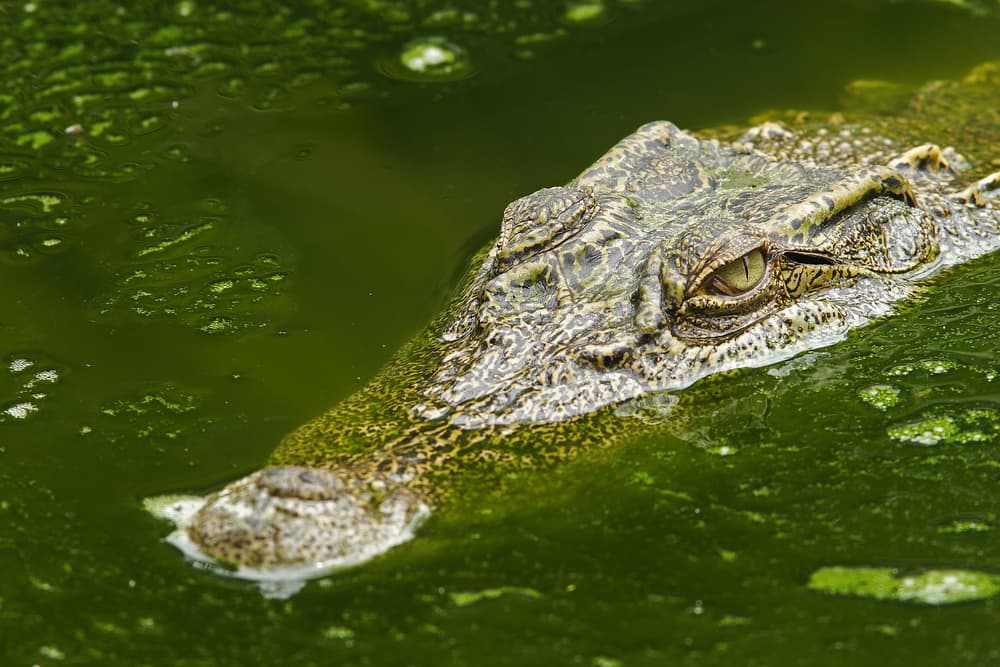
The billabong shelters one of Australia's highest concentrations of saltwater crocodiles (Crocodylus porosus). Waterbirds are everywhere: long-legged jacanas walking across water lily pads, white-breasted sea eagles perched on dead trees, herons, ibis, spoonbills. During the dry season, yellow and pink water lilies carpet the surface—hence the site's evocative name.
History and context
The Bininj/Mungguy country has been inhabited for at least 65,000 years. Yellow Water lies within the territory of the Jawoyn and Mirarr peoples. The site is integrated into Kakadu National Park, co-managed by traditional owners and Parks Australia since 1979. Kakadu holds the rare distinction of dual UNESCO World Heritage inscription for both its natural and cultural values.
The highlights of your visit
The dawn cruise
Departing before sunrise rewards you with low-angle golden light across the water and peak animal activity. Crocodiles bask at the surface, birds feed actively. It's the most photographed moment in the park.
The late-afternoon cruise
End-of-day light bathes the billabong in orange and red tones. White-breasted sea eagles become increasingly active. The mood differs from dawn—calmer, with warmer light.
Water lilies in the dry season
Between June and August, yellow water lilies (Nymphaea violacea) blanket large stretches of the billabong. They form an emblematic visual element and a traditional food resource for the Bininj/Mungguy peoples.
Photography tips
The dawn cruise delivers the best light: golden, low-angle, without harsh shadows. Use a telephoto lens (200 mm minimum) to capture distant birds and crocodiles. Late afternoon's warm light enhances water reflections beautifully. Avoid midday—the light is flat white and wildlife far less active.
Location and access
Yellow Water sits at Cooinda, in the park's central-southern section, roughly 50 km south of Jabiru. Access is via the Kakadu Highway, passable in a standard 2-wheel-drive vehicle during the dry season. During the wet season (November–April), certain roads may be cut off—always verify conditions with Parks Australia before departure. Cooinda Lodge provides accommodation and dining on-site.
In the surrounding area
- Ubirr — Bininj/Mungguy rock-art site with panoramic views over the floodplains at sunset.
- Nourlangie (Burrungkuy) — among Kakadu's best-preserved rock-art galleries, featuring Mimi and Namarrgon figures.
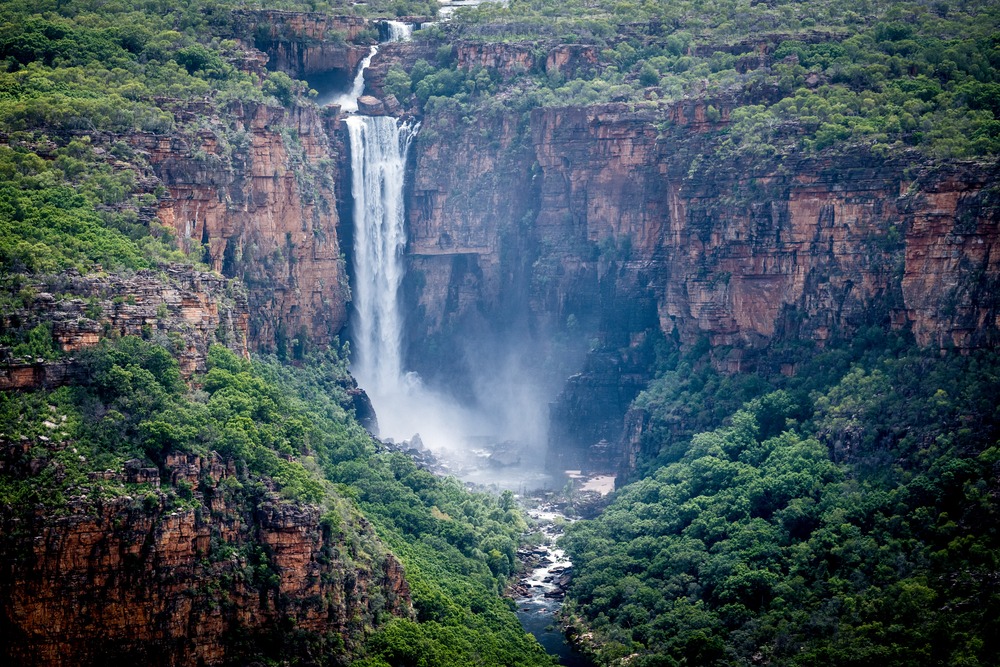
- Jim Jim Falls — spectacular waterfall accessible in the dry season, framed by towering sandstone cliffs.
- Jabiru — the park's only town, with services, fuel and visitor information at the Bowali Visitor Centre.
Frequently asked questions
The dry season (May to October) is ideal: water levels remain stable, wildlife concentrates around the billabong and roads are passable. During the wet season, the site may be inaccessible.
Yes, advance booking is strongly recommended, especially for dawn cruises during peak season (July–August). Capacity is limited and departures often fill several days ahead.
No. Yellow Water supports a substantial population of saltwater crocodiles, a species dangerous to humans. Swimming is strictly prohibited in all Kakadu waters.
Both have their merits. Dawn offers the most photogenic light and the most active wildlife. Late afternoon provides warm light and a more peaceful atmosphere. If you can only do one, dawn is generally the preferred choice.
From Cooinda, Ubirr and Nourlangie are accessible as a day trip. Plan at least two nights in the park to combine a Yellow Water cruise with visits to the rock-art sites.
Interested in this visit?
We can include it in your personalised itinerary.