Blue Mountains
Blue Mountains
Just two hours from Sydney, the Blue Mountains bring together sandstone cliffs, eucalyptus forests, hilltop villages and ancient caves, listed as a UNESCO World Heritage site.
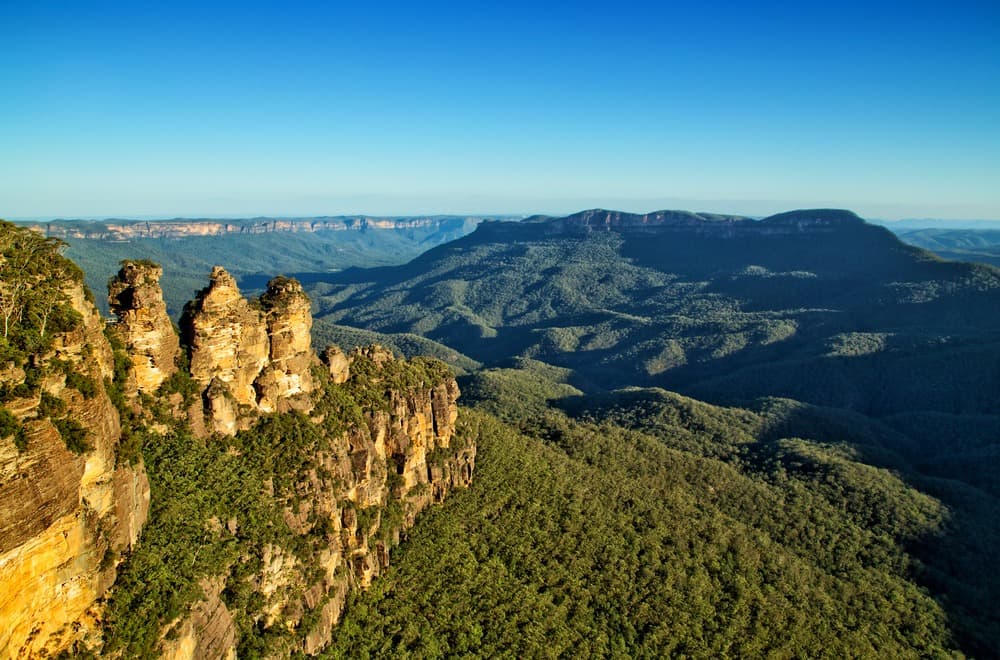
Less than two hours west of Sydney, the Blue Mountains form a vast sandstone massif listed as a UNESCO World Heritage site. Ochre cliffs, valleys blanketed in eucalyptus, and a bluish haze — caused by essential oils released by the forest — compose the landscape. The region can be explored in a day from Sydney, but deserves two to three days to combine hiking, hilltop villages, and karstic caves.
Why visit the Blue Mountains
The massif brings together several rare assets in immediate proximity to a major Australian city: a national park recognized by UNESCO for its biodiversity of eucalyptus species (more than 90 species recorded), a network of marked trails accessible to all levels, and mountain villages (Katoomba, Leura, Blackheath) equipped with cafés, bookstores, and accommodations. It's also one of the few areas where you can combine cliff hiking, canyoning, rock climbing, and cave exploration within a few days.
History and Aboriginal heritage
Long considered impassable by settlers, the Blue Mountains were crossed in 1813 by Blaxland, Wentworth, and Lawson, who followed the ridges rather than the valleys — a strategy that opened passage to the interior of the continent. Two years after this expedition, William Cox and a team of convicts built a road in just 27 weeks, accelerating the colonization of the west.
The area subsequently experienced intense mining activity until World War II, particularly around Katoomba where coal and oil shale were exploited. A few vestiges of infrastructure are still visible along trails descending into Jamison Valley.
Before colonization, the massif was inhabited by the Gundungurra and Darug peoples. The legend of the Three Sisters tells the story of three young women from the Katoomba tribe transformed into stone by an elder during a conflict with a rival clan; the elder being killed in combat, the sisters remained frozen. At major sites, the practice of dadirri — calm and respectful listening — invites a different relationship with the landscape.
What to see and do
Echo Point and the Three Sisters
The Echo Point overlook at Katoomba dominates Jamison Valley and offers the most famous view of the park, with the silhouette of three sandstone peaks. From this point, the Giant Stairway and its 900 steps descend to the base of the formations, where several trails converge at the bottom of the valley.
Scenic World
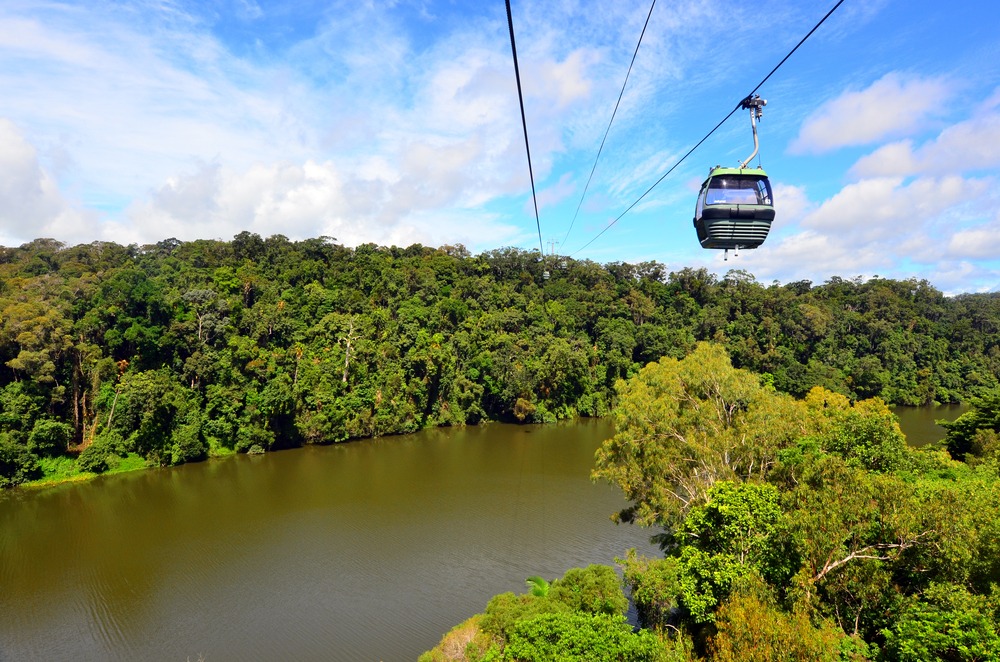
Located at Katoomba, this site combines three installations: the Scenic Railway, a rack railway among the world's steepest, the Scenic Skyway, a glass cable car crossing a gorge, and the Scenic Walkway, a boardwalk set in a temperate rainforest canopy. Allow 2 to 3 hours for everything.
Wentworth Falls
A tiered waterfall served by a network of trails. The Wentworth Falls Track (3.5 km) descends to the base of the falls, while the Overcliff and Undercliff loops run along the cliff with several viewpoints.
Jenolan Caves
In the southwest of the park, this karstic system ranks among the world's oldest dated systems (estimates around 340 million years). Several caves are visited on guided circuits; some offer lantern tours reproducing the conditions of historical exploration.
Fauna and flora
Koalas are rare in the Blue Mountains: they feed on a specific type of eucalyptus poorly represented here. However, you'll more easily encounter kookaburras (with their distinctive cry evoking human laughter), lyrebirds that mimic sounds, wombats in the evening near campsites, possums, and nocturnal frogmouths. Botanically speaking, the Wollemi pine, a living fossil dating back to Gondwana and rediscovered in 1994, grows only in a few isolated, protected valleys.
Sports activities
Empress Falls, near Wentworth Falls, is a canyoning site managed by several operators. Blackheath concentrates the massif's most renowned climbing routes. The park also lends itself to stargazing and, in some places, observing fireflies after dark.
When to go
The park is visitable year-round, but Southern spring (September to November) and autumn (March to May) offer the best hiking conditions: mild temperatures, often clear skies, blooms or autumn colors. Summer (December-February) is warmer but remains cooler than Sydney, with increased risk of storms and fires late season. Winter (June-August) is cold at altitude, sometimes snowy at Blackheath, and mornings can be misty — a visual asset for photographers.
How to get there from Sydney
- By train: from Central Station, the Blue Mountains line serves Glenbrook, Wentworth Falls, Leura, Katoomba, and Blackheath. Allow approximately 2 hours to Katoomba. A straightforward option without a car, supplemented by the local Explorer bus or on foot.
- By car: via the M4 then the Great Western Highway (A32), it takes 1.5 to 2 hours to Katoomba depending on traffic. A car remains the most flexible option for reaching Jenolan, Blackheath, or remote trails.
- By campervan: practical for spending several days exploring while combining transport and accommodation.
Practical information
Entry to the national park is free, except for the Glenbrook zone (moderate vehicle toll per day). The main trails are marked and well-maintained; bring water, good shoes, and a warm layer even in summer, as the climate changes quickly at altitude.
For accommodation, several caravan parks are located at Katoomba, Blackheath, and Lithgow. Two free campsites worth noting: Blackheath Glen Reserve (accessible to all vehicles) and Murphys Glen (4x4 only).
Nearby villages and sites
- Katoomba: nerve center of the park, starting point for Echo Point and Scenic World, with the largest accommodation selection.
- Leura: residential village with a refined atmosphere, known for its gardens, boutiques, and its retro Candy Store.
- Blackheath: preferred base for hikers and climbers, quick access to Govetts Leap and Grose Valley.
- Glenbrook: eastern gateway to the park, more forested and less crowded.
Frequently asked questions
Frequently asked questions
Plan your trip
The Blue Mountains fit naturally into a stay combining Sydney and the east coast. To build a complete itinerary, consult our trips to Australie and our suggestions around the Sydney region.
Interested in this visit?
We can include it in your personalised itinerary.