Daintree Forest
Daintree Forest
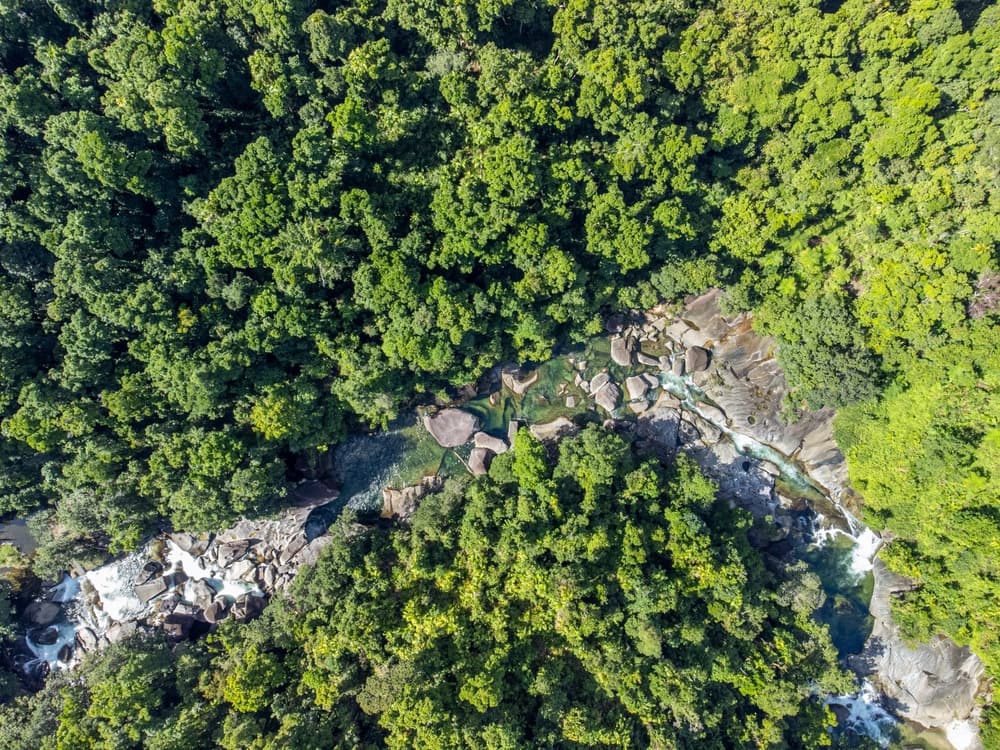
UNESCO-listed Daintree Forest, in far north Queensland, is one of the world's oldest tropical rainforests and the only place on Earth where ancient jungle meets coral reef.
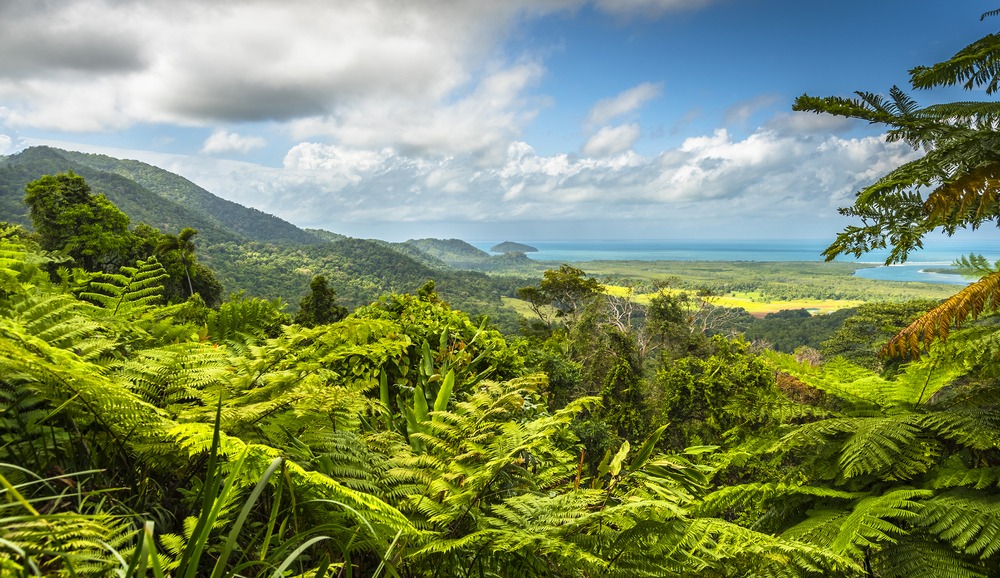
Located in tropical far north Queensland, Daintree Forest is one of the world's oldest tropical rainforests, with a botanical history estimated at over 100 million years. Listed as a UNESCO World Heritage site, it stretches from the Daintree River to Cape Tribulation, a unique point on the planet where an ancient tropical forest meets directly with a coral reef, the Great Barrier Reef. Sir David Attenborough called it "the most extraordinary place on Earth."
Why visit Daintree Forest
Three distinctive characteristics set this site apart and justify the detour from Cairns or Port Douglas:
- Primordial biodiversity: some plant species present here existed in the age of dinosaurs. The forest is home to 28 of Australia's 36 mangrove species and remarkable endemic fauna.
- Continuous human presence: unlike other remote regions of Australie, Daintree is permanently inhabited by the Kuku Yalanji, an Aboriginal people whose presence dates back an estimated 50,000 years.
- A unique geographic convergence: at Cape Tribulation, two UNESCO-listed ecosystems meet: tropical rainforest and coral reef.
History and settlement
The Kuku Yalanji have occupied this territory for millennia. Divided into several clans, they still speak eight Aboriginal languages today and maintain a precise spiritual relationship with each natural site in the region. Several cultural guided tours provide insights into this transmitted knowledge: plant use, landscape reading, creation stories.
European arrival came late: it was explorer George Dalrymple who surveyed the area in 1873. The forest was then named after Richard Daintree, a British geologist associated with Queensland's mining industry. The colonial period opened a phase of logging and agricultural exploitation, before the site's ecological value led, in the 20th century, to its protection and UNESCO listing in 1988.
What to see and do
Endemic fauna
Daintree concentrates wildlife difficult to observe elsewhere:
- Cassowary: a threatened flightless bird, essential to the dispersal of many forest seeds.
- Saltwater crocodile: present in rivers and estuaries, to be observed only from a boat.
- White-lipped tree frog: a nocturnal amphibian with vivid colouring.
- Spotted cuscus, sugar glider, musky rat-kangaroo: discreet marsupials, active at dawn or night.
Ancient flora
Among emblematic species are the idiot fruit, a primitive tree with toxic seeds, the blue quandong with striking fruits, the Burrawang palm of prehistoric lineage, and the stinging tree (Dendrocnide moroides), to be avoided at all costs due to its stinging hairs.
Boardwalks and viewpoints
Elevated walkways are the best way to explore the forest without damaging it:
- Jindalba Boardwalk and Marrdja Boardwalk: short, accessible loops, allow 30 to 60 minutes.
- Dubuji Boardwalk: crossing mangroves and wet rainforest.
- Kulki Lookout: panoramic views over Cape Tribulation bay.
Mount Sorrow Trail
Reserved for experienced hikers, it climbs to approximately 680-770 m elevation depending on sources. Allow a full day, water and hiking boots essential.
River cruises
On the Daintree River and Cooper Creek, several operators offer outings to observe crocodiles and birds: Solar Whisper (silent solar-powered boat), Crocodile Express (departures near the ferry), as well as circuits on Cooper Creek.
Local producers
Two gourmet stops punctuate the route: Cape Trib Farm, which showcases little-known tropical fruits from far north Queensland, and Floravilla Ice Cream Factory, which produces ice cream from local ingredients.
Practical information
- Crocodile safety: no swimming in rivers, estuaries or beaches identified as at-risk. Always respect warning signs.
- Tides: certain beach sections and ferry passage may be affected by tides, check before departing.
- Equipment: closed-toe shoes, insect repellent, water, lightweight covering clothing. For demanding trails, rain is possible year-round.
- Network: very limited mobile coverage beyond the ferry, plan offline maps.
When to visit
The dry season, from May to October, offers the best conditions: moderate temperatures, low humidity, accessible trails. This is the recommended period for hiking and boardwalks. The wet season, from November to April, brings denser vegetation but also heavy downpours, high humidity and flooding risk that may close roads and trails.
How to get there
- From Cairns: approximately 2 hours drive for 100 km, via Port Douglas and Mossman.
- From Port Douglas: approximately 1 hour to Daintree Ferry.
- Daintree Ferry: the only vehicle river crossing. Daily service with broad hours, moderate return fare (check on site, subject to change).
- Beyond the ferry: approximately 35 km of road to Cape Tribulation. A 4WD is recommended for secondary tracks and river crossings.
- Without a car: organized excursions by bus or 4WD from Cairns or Port Douglas, day trips or two-day packages.
To combine in the region
Daintree fits naturally into an itinerary in far north Queensland: Cairns serves as an air and logistics hub, Port Douglas is the beach destination, and the Great Barrier Reef is accessible from both ports. To extend your exploration of protected natural areas in Australie, you might also consider Cradle Mountain National Park in Tasmania, the Gordon River or the landscapes of Henty Dunes.
Frequently asked questions
Frequently asked questions
Planning your trip
Daintree Forest integrates ideally into a circuit in far north Queensland, complementing the Great Barrier Reef and the Atherton Tablelands. To build a custom itinerary, consult our Australie trips.
Interested in this visit?
We can include it in your personalised itinerary.