Freycinet National Park
Freycinet National Park
On Tasmania's east coast, Freycinet combines pink granite peaks, white sand beaches and marine wildlife. Essential guide for visiting Wineglass Bay from Coles Bay.
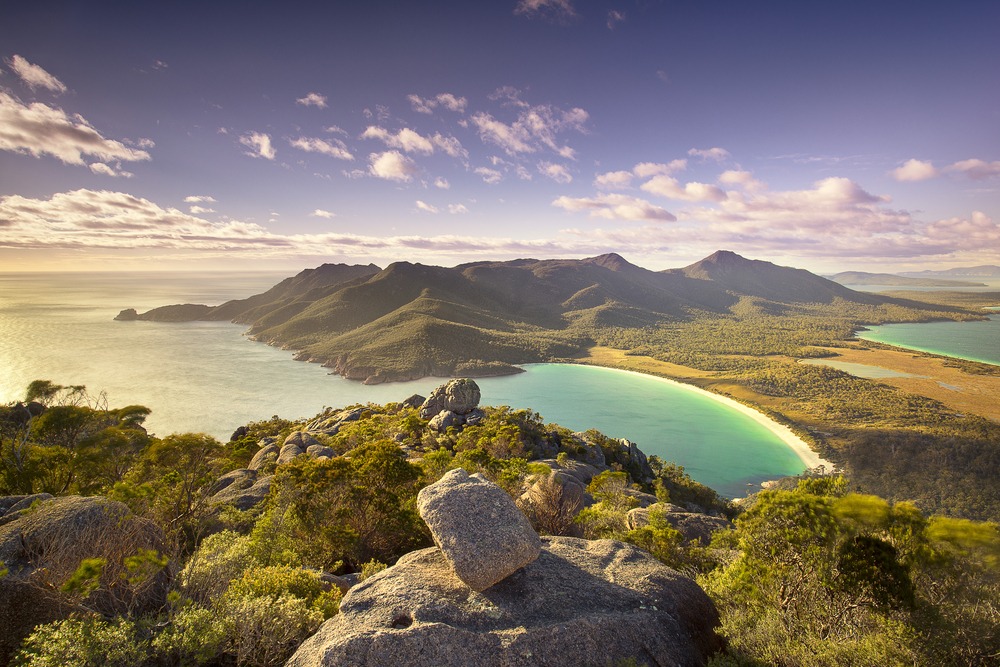
On Tasmania's east coast, Freycinet National Park occupies a peninsula where the pink granite peaks of the Hazards descend toward clear waters. Wineglass Bay, a crescent of sand accessible by hiking trail, is its most celebrated destination. The park is reached from the village of Coles Bay, approximately 2.5 hours' drive from Hobart or Launceston.
Why visit Freycinet
Freycinet brings together three elements rarely found on the same site: a granite massif tinged with pink, white sand beaches bordered by turquoise waters, and a jagged coastline suited to both kayaking and hiking. The peninsula remains largely preserved, with over 500 plant species recorded (banksias, eucalypts, wild orchids) and marine wildlife accessible from the shore. Allow one day for the main viewpoints, two to three days to explore secondary coves and local producers.
Park history
The park takes its name from French navigator Louis de Freycinet, who created the first maps of Tasmania's eastern coast in the 19th century. Wineglass Bay derives its name from a less peaceful period: whale hunting practised in the bay once tinged the waters red, evoking the colour of wine. The granite peaks dominating the peninsula, nicknamed The Hazards, take their name from Richard Hasard, a former whaler who worked in the region during the 19th century (the African-American origin sometimes mentioned remains debated).
Tourism developed from the 1930s thanks to Ron Richardson, a local pioneer known for landing directly on the neighbouring beach to bring his first visitors. The national park has been officially protected since 1916, making it one of Tasmania's oldest.
What to see and do
Wineglass Bay and viewpoints
- Wineglass Bay Lookout: the signature hike, approximately 1.5 hours return from the car park, with sweeping views over the crescent-shaped bay.
- Trail to the beach: more demanding extension, approximately 3 hours return with roughly 1,600 steps to reach the sand.
- Cape Tourville: short circular trail with lighthouse, coastal viewpoints and possible whale watching in winter.
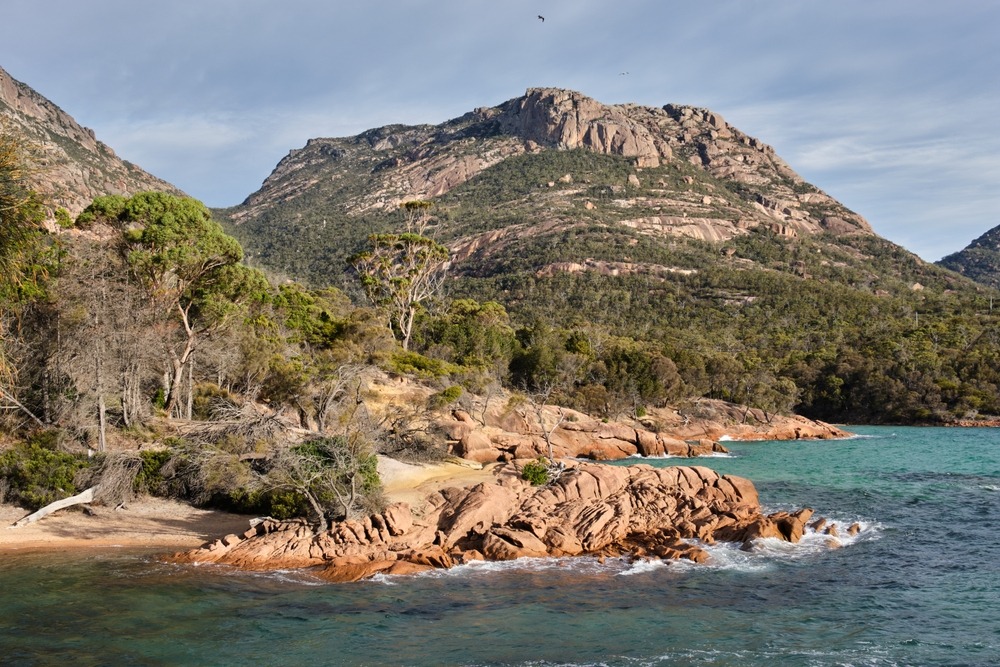
- Sleepy Bay: rocky cove accessible within minutes' walk, with striking light at sunrise.
Water sports and outdoor activities
- Sea kayaking: guided excursions along granite cliffs and isolated coves of the peninsula.
- Snorkelling: clear waters at Sleepy Bay, Coles Bay and Friendly Beaches, with seals, dolphins and rays. Honeymoon Bay suits beginners.
- Fishing: Coles Bay is renowned for squid, bream and salmon. Permit required, available on official Tasmanian websites.
- Scenic flights: overflights of the park, Bay of Fires and Port Arthur departing from Hobart or Friendly Beaches.
Fauna and flora
Moulting Lagoon, classified as a wetland of importance, hosts a wide variety of aquatic birds including black swans. From Cape Tourville and Wineglass Bay, you can observe sea eagles and gannets. Coastal waters welcome seals, dolphins and rays. The park's flora includes over 500 species, with wild orchids flowering in spring.
Local producers
- Freycinet Marine Farm: oysters, scallops, abalone and rock lobster, tasting and farm tours.
- Freycinet Vineyards: estate 7 km from Coles Bay, cool-climate varieties (Sauvignon Blanc, Chardonnay, Pinot Noir).
- Kate's Berry Farm: family operation open November to May, ice creams and jams with views over Great Oyster Bay.
Practical information
The park is managed by Tasmania Parks and Wildlife. Entry is by national park pass (day or vehicle pass), purchasable online or at Coles Bay visitor centre. The village of Coles Bay concentrates accommodation, kayak rentals and trail starting points. Bring water, closed-toe shoes for hiking and sun protection: viewpoints have little shade.
When to visit
- Spring (September-November): mild temperatures, wildflower blooms, moderate crowds.
- Summer (December-February): peak season, ideal for swimming and kayaking.
- Autumn (March-May): pleasant climate, decreasing visitor numbers.
- Winter (June-August): wilder atmosphere, cool temperatures, best period for spotting migrating whales offshore.
How to get there
The park is most easily reached by car from Hobart or Launceston, 2.5 to 3 hours' drive. From the Tasman Highway (A3), take Coles Bay Road (C302) south of Bicheno. This sealed road leads to Coles Bay and the visitor centre.
For the Friendly Beaches section, a gravel track branches off approximately 9 km after the A3 exit.
- Hobart Airport (HBA): approximately 180 km.
- Launceston Airport (LST): approximately 160 km.
Car rental is available at both airports; booking advised in high season. Without a vehicle, several day tour operators depart Hobart and include transport.
Combine with
Freycinet integrates well into an east coast Tasmania itinerary. To the north, Maria Island offers a similar experience in wilder form without vehicles. Further inland, Cradle Mountain National Park complements your stay with alpine scenery. To extend to the mainland, Phillip Island and Port Campbell in Victoria remain accessible stops from Melbourne.
Frequently asked questions
Frequently asked questions
Plan your trip
Freycinet forms part of a broader Tasmanian itinerary, combining Hobart, the east coast and inland parks. To plan your stay, consult our Australie experiences.
Interested in this visit?
We can include it in your personalised itinerary.