Sydney Harbour Bridge
Sydney Harbour Bridge
Inaugurated in 1932, Sydney Harbour Bridge can be crossed on foot, by bike, by ferry or via the guided BridgeClimb ascent. Complete practical guide.
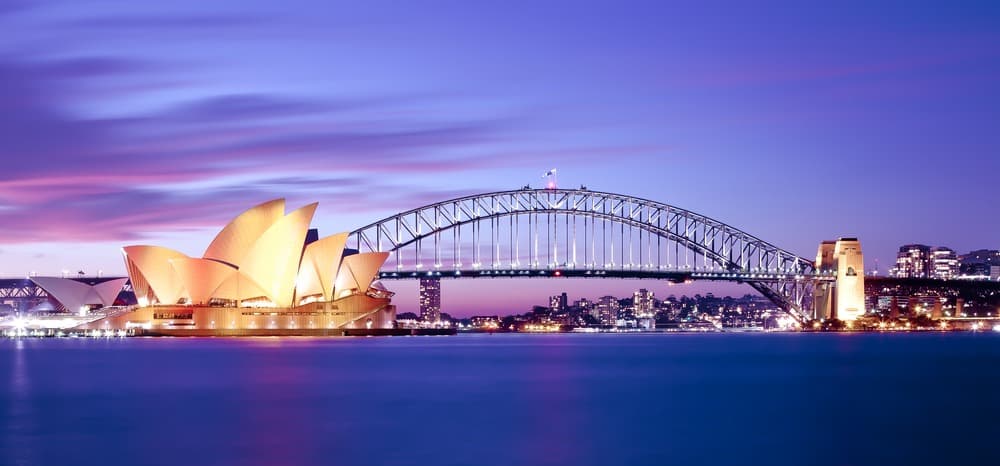
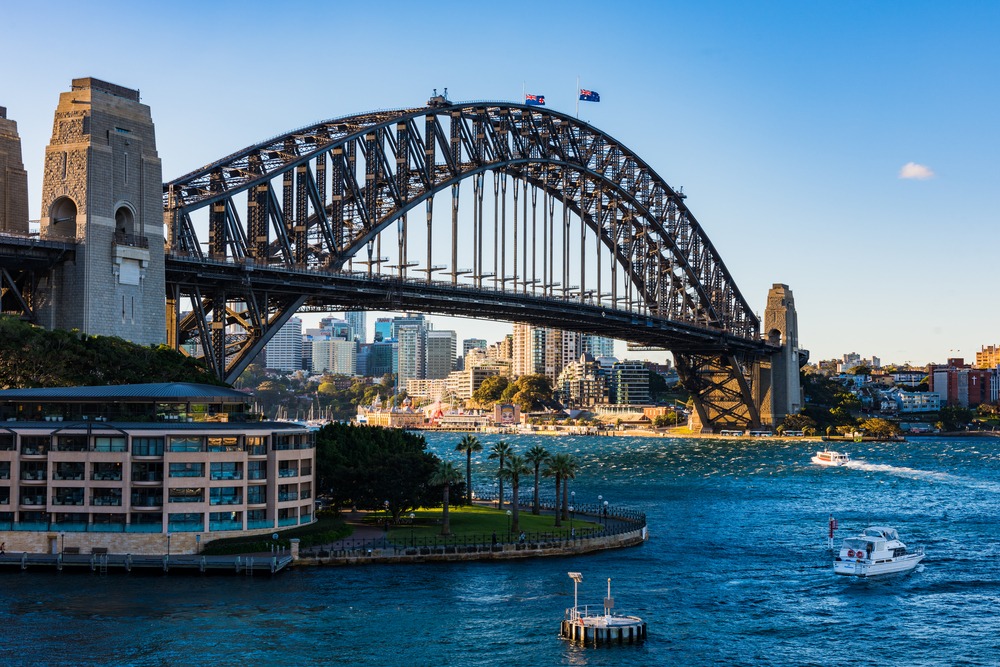
Connecting the historic district of The Rocks to North Sydney, the Sydney Harbour Bridge spans Sydney Harbour (Port Jackson) over 1,149 metres. Completed in 1932, this steel arch bridge remains, alongside the Sydney Opera House, the iconic image of the Australian metropolis. It can be crossed on foot for free, by bike, by ferry, or via the guided BridgeClimb ascent.
Why visit Sydney Harbour Bridge
The bridge concentrates several points of interest on a single site. From an engineering perspective, its steel arch of 134 metres remains one of the highest in the world, and its deck width (48.8 m) was listed in the Guinness Book as a world record for decades, until it was surpassed in the early 2010s. As for views, the pedestrian promenade offers direct sightlines to the Opera House, the bay, and the Barangaroo district. In terms of use, it's an active transport corridor you'll naturally cross while moving around Sydney.
History of the bridge
The first proposals for a bridge connecting the two shores of Port Jackson date back to 1815. The project only materialized in the aftermath of the First World War, driven by Dr JJC Bradfield, an engineer regarded as the "Father of modern Sydney". Following an international tender, the government of New South Wales (of which Sydney is the state capital, not to be confused with Canberra, the federal capital) selected the English company Dorman Long and Co Pty Ltd.
Construction began in 1923 and lasted nearly a decade. The bridge was officially inaugurated on 19 March 1932. Its distinctive silhouette quickly earned it the nickname "The Coathanger". It stretches over 1,149 m, making it one of the longest steel arch bridges in the world.
What to see and do
Cross on foot to Pylon Lookout
The pedestrian promenade is free and accessible throughout the day. To access it, head to the eastern end of the bridge and take the stairs near the Australian Heritage Hotel, at the heart of The Rocks district. The full crossing takes approximately 20 to 30 minutes depending on your pace.
Midway, the Pylon Lookout (a paid museum set in one of the granite pillars) opens onto an unobstructed panorama: Sydney Opera House, Museum of Contemporary Art, Barangaroo Reserve, and North Sydney.
Cycling across the bridge
The cycle path runs along the western side of the bridge. The most convenient access is near the Sydney Observatory. Several rental shops in the city offer bikes by the half-day or full day.
BridgeClimb: scaling the arch
The BridgeClimb operator is the only one authorized to lead groups to the top of the arch, 134 m above the water. Two main options are available:
- Ultimate Climb (approximately 3 hours): complete ascent to the summit via the outer arch.
- Summit Express (approximately 2 hours 30 minutes): faster version with the same final views.
Departures are offered at dawn, during the day, at dusk, or at night. The price is steep: budget accordingly per person and plan ahead. Online booking is mandatory.
View the bridge from the water
To grasp the scale of the arch, nothing beats the perspective from the bay. Ferries departing from Circular Quay (the most economical option) serve notably Taronga Zoo, Watsons Bay, Cockatoo Island, and Parramatta. Private cruises, sailing trips, and helicopter or seaplane tours round out the offering at considerably higher prices.
Practical information
Pedestrian and cycle crossing is free. The Pylon Lookout and BridgeClimb are paid attractions with a significant price difference between them. Bring closed-toe shoes and a windbreaker: it's often cooler and windier on the deck than at harbour level.
For dining, The Rocks district has a dense offering of historic pubs: the Glenmore and Australian Heritage Hotel on Cumberland Street, or the Harbour View Hotel, located almost directly beneath the bridge. Along Walsh Bay, several restaurants offer unobstructed views of the structure. For a frontal view of the arch, prefer establishments on the northern shore (Kirribilli, Milsons Point).
When to visit
The bridge can be visited year-round. The Australian summer (December to February) is the busiest: long days, multiple water activities in the bay, but also heavy tourist crowds and temperatures that can exceed 30°C. Autumn (March to May) remains mild during the day and cooler in the evening, with often excellent light for photography. Winter (June to August) is windier but rarely rainy, and far less crowded. For BridgeClimb, dusk sessions are the most popular year-round: book several weeks in advance.
How to get there
The logical starting point is Circular Quay, accessible by:
- Train from most Sydney districts (Circular Quay station);
- Bus, via numerous lines serving the CBD;
- Ferry, which already provides a first glimpse of the bridge;
- On foot from the city centre, in 10 to 20 minutes depending on your starting point.
A few car parks exist around The Rocks and Milsons Point, but parking is expensive and traffic is heavy during rush hours.
What to see nearby
- The Rocks: historic district at the southern base of the bridge, ideal before or after crossing.
- Barangaroo Reserve: landscaped waterfront visible from Pylon Lookout.
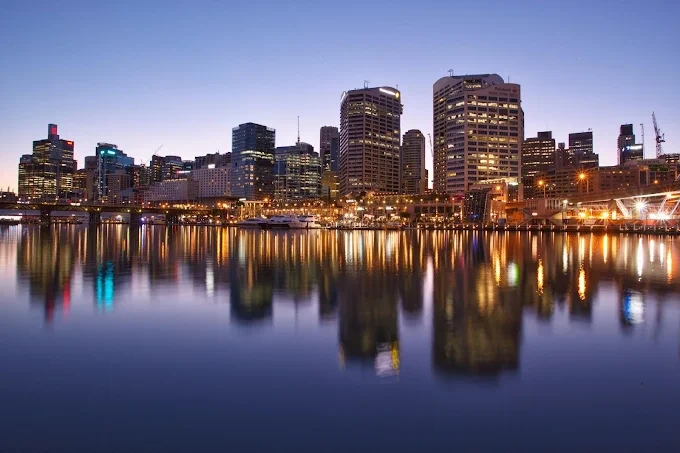
- Darling Harbour: 15-20 minutes walk away, with museums and restaurants.
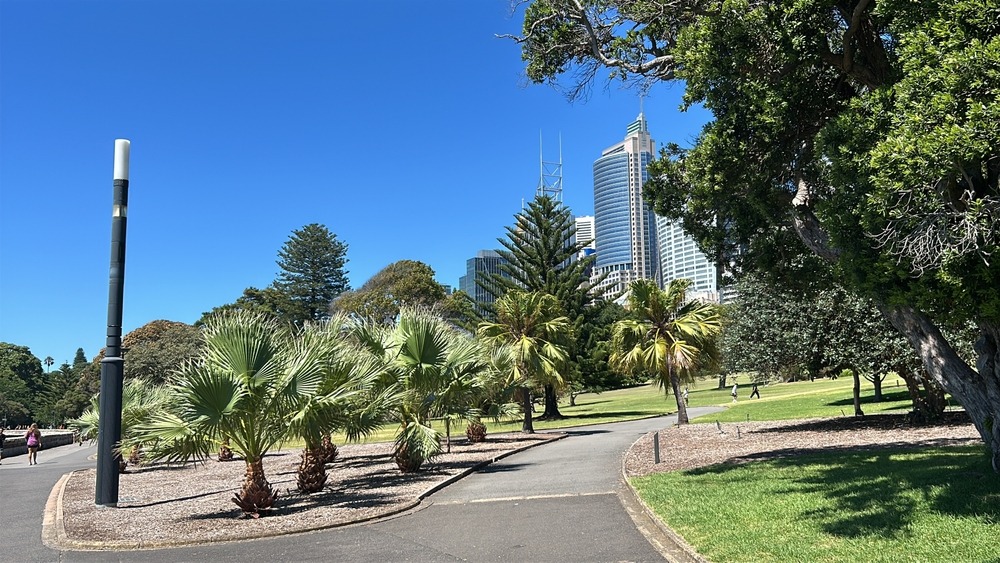
- Royal Botanic Garden: another classic vantage point over the bridge and Opera House.
- Surry Hills: district of cafés and restaurants, to combine with a day in the centre.
Frequently asked questions
Frequently asked questions
Yes. The pedestrian promenade, accessible from the eastern side of The Rocks, is entirely free. Only the Pylon Lookout (museum in a pillar) and BridgeClimb are paid.
Allow 20 to 30 minutes on foot for the full crossing, not including photo stops. By bike, it's faster, but the cycle path is on the western side, separated from the pedestrian promenade.
The price is steep and varies depending on the package (Ultimate or Summit Express) and time of day (day, dusk, night). Sunset sessions are the most expensive. Check current prices on the official website and book in advance.
The ascent is done via secured walkways with harnesses. It remains exposed, however, 134 m above the water. If you're afraid of heights, the Pylon Lookout already offers a very satisfying viewpoint at a lower cost.
Three complementary angles: from Mrs Macquarie's Point in the Royal Botanic Garden (classic framing with the Opera House), from Milsons Point on the northern side (frontal view of the arch), and from a ferry departing from Circular Quay.
Planning your trip
Sydney Harbour Bridge naturally fits into a broader discovery of the city of Sydney and the Australian east coast. To build a custom itinerary incorporating Sydney, the Great Barrier Reef, or the Outback, consult our travel ideas to Australie.
Nearby
Interested in this visit?
We can include it in your personalised itinerary.