Litchfield National Park
Litchfield National Park
140 km from Darwin, Litchfield National Park concentrates swimable waterfalls, cathedral termite mounds and spectacular sandstone formations. Our complete guide.
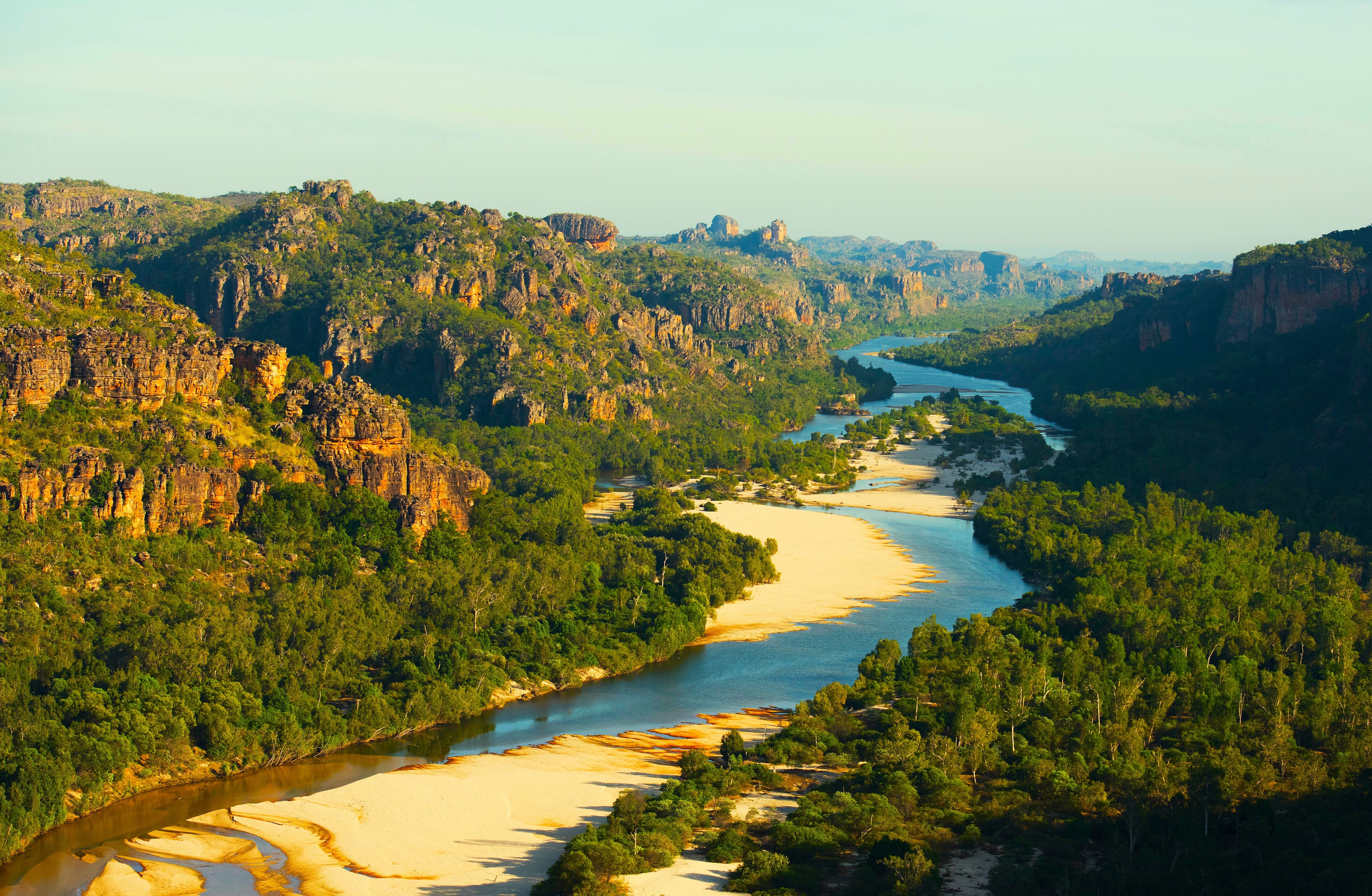
Litchfield National Park is a popular day trip from Darwin, located 140 km away. In this region of Australia's Top End, wild forests stretch across vast areas, dotted with wetlands and flowering plains. Numerous waterfalls cascade through the landscape, carving out exceptional gorges. An absolute must-discover for nature enthusiasts.
History
The region was home to Aboriginal Australians for nearly 60,000 years. Frederick Henry Litchfield discovered the area in 1864. At the time, the British were searching for strategic locations along the Adelaide River to build defensive forts. However, upon observing the topography and climate, they preferred to use the Litchfield territory for agricultural purposes.
Located to the east of the park, the settlement of Rum Jungle was the site of Australia's first uranium mine. Opened in 1950, the operation contributed to the economic boom of the Top End until the ore deposit was exhausted in 1971. A few years later, in 1986, authorities finally designated the Litchfield area (1,500 km²) as a national park.
Discovering Litchfield National Park
The Tabletop track, the main hiking route within the reserve, winds through wooded savannas, waterfalls and lakeside sites over 39 km. There are three starting points to enjoy this scenic route: Walker Creek, Greenant Creek and Wangi Falls. Shorter circuits, ranging from 1 to 3 km, allow you to marvel at the landscape without exhaustion.
Meet the Animals of Litchfield
Litchfield's pristine environment is home to abundant wildlife, from endearing creatures like opossums, kangaroos, wallabies, flying foxes and geckos… to more hostile beings such as buffalo, snakes, crocodiles and wild boar. Insects are (unfortunately) also part of the picture: don't forget your insect repellent to protect yourself from mosquitoes and green ants. What also sets this park apart from other Australian reserves are its immense termite mounds. Don't miss the cathedral termite mounds of Litchfield, some reaching up to 4 metres in height.
Contemplate the Waterfalls
Florence Falls is a must-see when you explore Litchfield National Park. Enjoy a swim in the small pool nestled among the rocks, then savour a picnic on the observation platform. Once refreshed, continue your excursion along the Florence Creek Walk (1.5 km) to Buley Rockhole, which features natural whirlpools and hot springs. Next come Tolmer Falls, not accessible for swimming, but whose dramatic scene of cascading river and steep cliffs will stay with you forever.
Finally, make sure to visit Wangi Falls, the easiest to access and the largest among Litchfield's waterfalls, where you can swim, grab a bite to eat and purchase souvenirs from the Aboriginal craft shop.
Other Attractions to Discover
Do you love unusual rock formations? Don't miss The Lost City, a collection of massive sandstone towers carved by erosion that resemble an abandoned city. For a touch of history, head to Blyth Homestead, a former pioneer property founded in the 1920s, which once housed a tin mine. The Butterfly Farm and Batchelor Children's Zoo are also worth visiting, as is the Adelaide River War Cemetery once you return to civilisation.
Practical Information
You won't have any difficulty reaching Litchfield National Park from Darwin if you have a car. You can access the park via unsealed roads through Batchelor, then along the East side of the reserve. The journey takes approximately one and a half hours. Another route involves passing through Berry Springs and continuing along the North-west side of the park. This road, currently under renovation, isn't too challenging to navigate in dry conditions.
Unfortunately, no public transport directly serves Litchfield National Park from Darwin. And even if there were, it wouldn't allow you to explore the various zones of the reserve.
When to Visit?
When planning a trip to Australia's Top End, think carefully about the types of experiences you're seeking, as the climate greatly affects road accessibility, camping facilities and attractions in general.
The best time to visit Litchfield National Park is winter, from May to October, which corresponds to the dry season. During this period, trails are easier to traverse and you can swim freely in bathing spots without risking an encounter with a crocodile. However, if you're planning to spend a few nights camping in the reserve, you'll need to book well in advance.
During the tropical summer, between November and April, some roads and hiking trails are closed. Most of the park remains accessible and you can admire the falls from numerous observation platforms.
Fees
Entry to Litchfield National Park is free. The only costs you should incur relate to camping (per person per night), if you plan to stay a few days. Rates vary by season, but typically don't exceed USD 8.
Want to discover this destination?
Our local advisors design your tailor-made trip.