Grampians National Park
Grampians National Park
An iconic Victoria park, the Grampians (Gariwerd) blend sandstone ridges, Aboriginal rock art and Australian wildlife, just 3 hours from Melbourne.
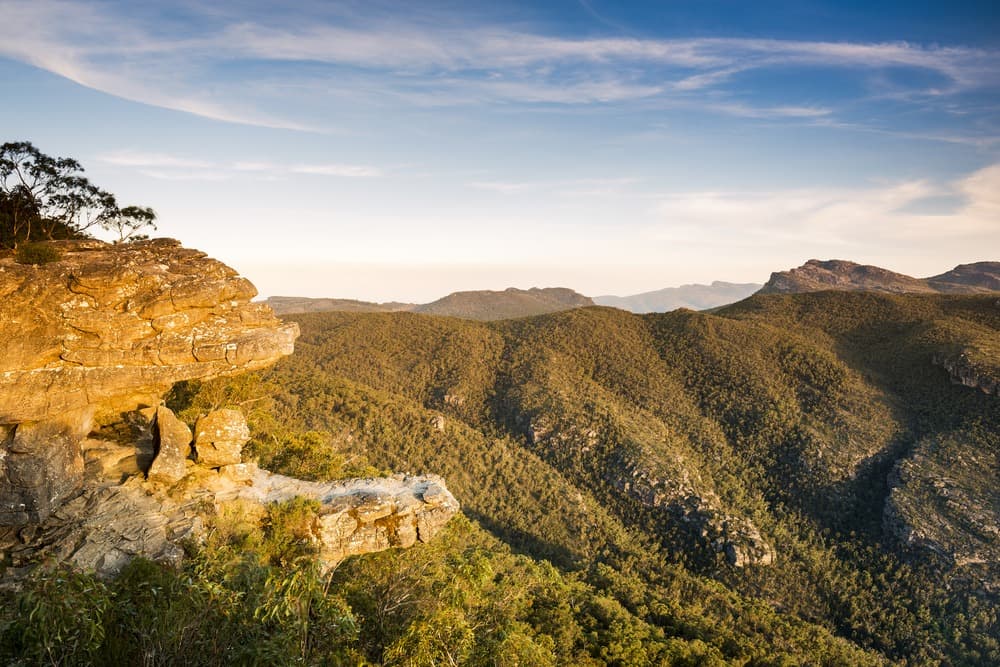
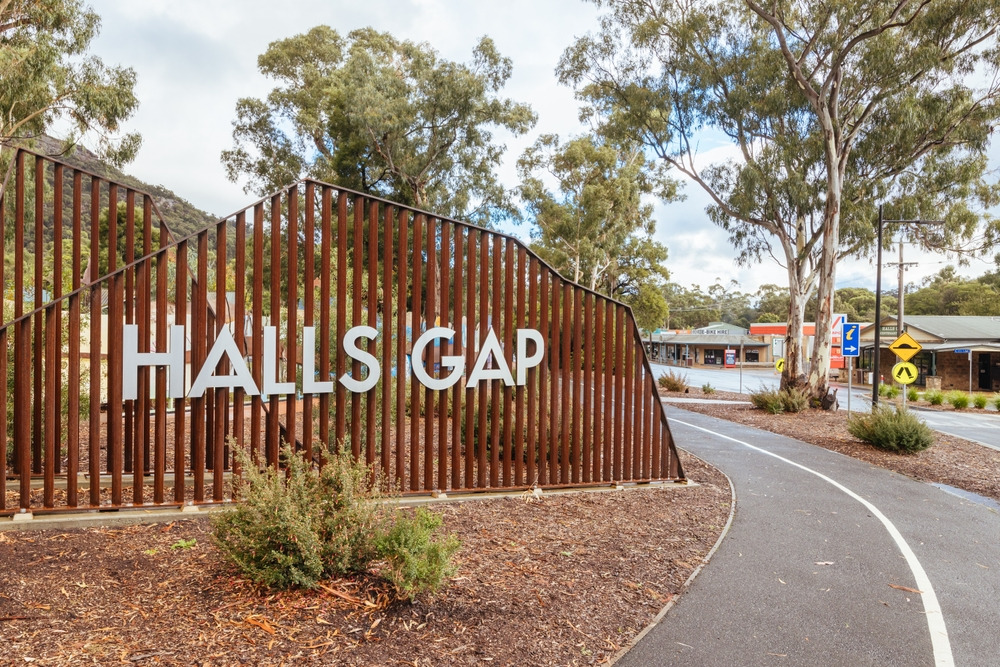
Grampians National Park, known as Gariwerd by the Aboriginal Jardwadjali and Djab Wurrung peoples, spans western Victoria, roughly three hours' drive from Melbourne. Its sandstone ranges, waterfalls and rock art sites make it one of Australia's great natural and cultural parks. Halls Gap, a village nestled at the foot of the ridges, serves as the main gateway.
Why visit Grampians National Park
The park combines three dimensions rarely found together: dramatic sandstone relief (crests, cliffs, valleys), dense biodiversity (over a third of Victoria's plant species are recorded here) and Aboriginal cultural heritage among the richest in south-eastern Australia.
Visitors come for hiking, car-accessible viewpoints, rock climbing at Mount Arapiles and wildlife observation (kangaroos, emus, koalas, black cockatoos). It is also an active cultural site: traditional communities participate in territory management and interpretation.
Park history
The territory has been inhabited for millennia by the Jardwadjali and Djab Wurrung peoples, who name it Gariwerd. They left behind one of south Australia's most important rock art collections, along with a creation story tied to the Bunjil shelter, a creator figure.
In 1836, Scottish explorer Thomas Mitchell reached the region and renamed it Grampians, after the mountains of his homeland. Colonisation brought a period of agricultural, forestry and mining exploitation. The territory was recognised as state forest in 1872, then gazetted as a national park in 1984.
In 1997, the dual name Grampians (Gariwerd) was introduced to acknowledge Aboriginal precedence. Change continues with the Greater Gariwerd Landscape Management Plan adopted in 2021, which involves the Barengi Gadjin Land Council and Eastern Maar Aboriginal Corporation in conservation decisions and protection of sacred sites and threatened species, such as the Grampians pea-flower.
What to see and do
Viewpoints and landscapes
- Mount William: the park's highest peak at 1,167 m, panoramic views over ranges and plains.
- Boroka Lookout: accessible by car, sweeping views over Halls Gap and Lake Bellfield.
- Reeds Lookout and The Balconies: rocky balconies overlooking Victoria Valley.
- MacKenzie Falls: waterfall nestled in a gorge, reached by a short trail.
Cultural heritage
- Bunjil Shelter: a rock art site linked to Aboriginal creation stories.
- Brambuk Cultural Centre: an interpretation venue for understanding Gariwerd's history and spirituality.
Hiking and activities
- The Pinnacle Trail: an iconic route above Halls Gap, plan for a half-day.
- Grampians Peaks Trail: a multi-day long-distance trek crossing the main ranges.
- Mount Arapiles: sandstone cliffs renowned for rock climbing, in the western part of the park.
- Cycling and canoeing: family trails and water bodies around Halls Gap.
- 4WD tours: to access remote sectors, especially in spring during flowering season.
Fauna and flora
The park is home to kangaroos, wallabies, emus, echidnas, possums, koalas and wombats, observable in the wild around Halls Gap. For birds: kookaburras, black cockatoos, parrots and raptors. Flora includes wild orchids, acacias, thryptomenes, correas and rainforest ferns.
Practical information
- Entry: park access is free. Some camping areas and sectors of the Grampians Peaks Trail require booking with Parks Victoria.
- Accommodation: Halls Gap concentrates lodges, motels and campsites. Stawell, Dunkeld and Hamilton offer alternatives on the outskirts.
- Safety: high fire risk in summer; some trails may be closed. Bring water, hat and check local weather apps.
- Accessibility: several lookouts and short trails are manageable without technical difficulty; ridge hikes require a good fitness level.
When to visit
Southern spring (September–November) is the ideal season: mild temperatures, spectacular flowering, cascades in full flow. Autumn (March–May) offers stable, cool conditions ideal for hiking. Summer (December–February) can be very hot with marked fire risk: adjust your itineraries and check alerts. Winter (June–August) is wetter but allows you to enjoy waterfalls and mossy forests with fewer visitors.
How to get there
- By car from Melbourne: take the Western Freeway to Ararat, then the Ararat–Pomonal Road to Halls Gap. Allow about 3 hours.
- Alternative routes: the Western Highway via Stawell and Horsham, or the Glenelg Highway via Dunkeld and Hamilton.
- From Adelaide: the Grampians are a natural stop on the Adelaide–Melbourne route.
- By train and bus: V/Line connects Melbourne (Southern Cross station) to Ararat, with bus connections to Halls Gap.
- Great Southern Touring Route: scenic circuit linking the Great Ocean Road, Shipwreck Coast, Grampians and Ballarat.
A car is still recommended to reach viewpoints and trail starts. Halls Gap allows several walks directly from the village.
Nearby
The village of Halls Gap is the most practical base for exploring the park. To extend your discovery of Australia's great natural parks, consider the Cradle Mountain National Park in Tasmania, or the Gordon River for another approach to wild heritage. In Victoria, French Island offers an island contrast close to Melbourne.
Frequently asked questions
Frequently asked questions
Two to three days allow you to see the main viewpoints, one or two hikes and Brambuk Cultural Centre. Plan a week for the complete Grampians Peaks Trail.
No, park access is free. However, a booking with Parks Victoria is required for some campsites and for Grampians Peaks Trail bivouacs.
Yes, by combining V/Line to Ararat then a bus to Halls Gap. On-site, several trails start from the village, but distant viewpoints require a vehicle or an organised tour.
Southern spring, from September to November, concentrates the flowering of orchids, thryptomenes and wild peas.
Gariwerd is the name given by the Jardwadjali and Djab Wurrung peoples to the entire range system of the park. Since 1997, the dual name Grampians (Gariwerd) has been official.
Plan your trip
Grampians National Park fits naturally into an itinerary in south-eastern Australia, between Melbourne, the Great Ocean Road and South Australie. To build a tailor-made stay, check our Australia travel suggestions.
Interested in this visit?
We can include it in your personalised itinerary.