Sydney Opera House
Sydney Opera House
A UNESCO World Heritage site, Sydney's opera house designed by Jørn Utzon houses multiple performance halls, including a concert hall with one of the world's largest mechanical-action pipe organs.
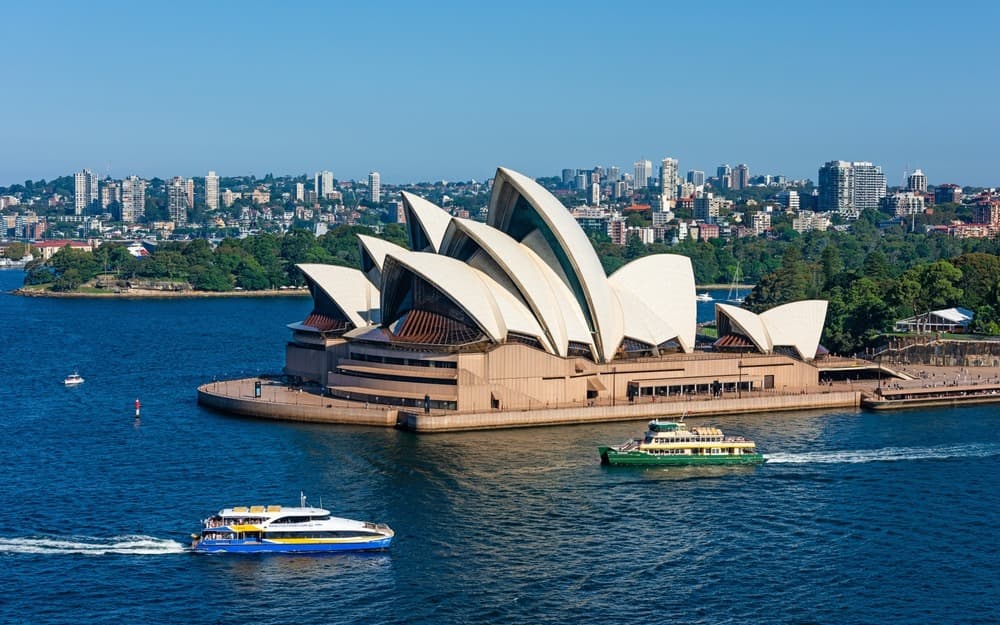
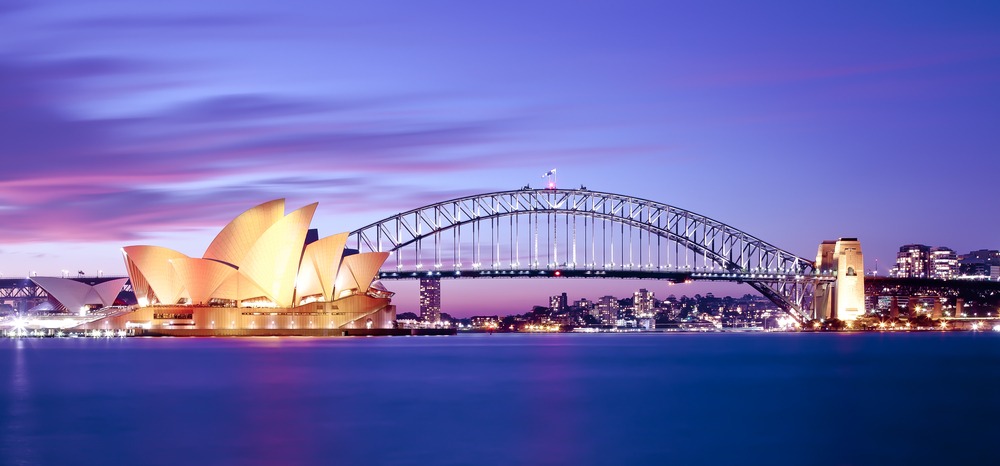
On the tip of Bennelong Point in Sydney, the Opera House rises its concrete sails above the harbour. Inscribed as a UNESCO World Heritage site since 2007, the building designed by Danish architect Jørn Utzon stands as both a major architectural monument of the twentieth century and one of Australia's leading cultural centres.
Why Visit Sydney Opera House
The Opera House offers three distinct attractions. First, it is a unique architectural achievement, with white shells that shift in appearance as the light changes. Second, it is a UNESCO-listed site recognised for its exceptional heritage value. Third, it is an active cultural venue: the concert hall, the Joan Sutherland Theatre, and several more intimate spaces host operas, ballets, symphony concerts, theatre, and contemporary works throughout the year. A visit can be enjoyed from the outside, via a guided tour, or during a performance.
Building History
The idea of giving Sydney a grand opera house emerged in the late 1940s, championed by Eugène Goossels, then director of the New South Wales Conservatorium of Music. In 1955, an international architecture competition attracted more than 200 entries. The jury selected a design by a then little-known Danish architect, Jørn Utzon, whose sculptural "shells" created an unprecedented silhouette.
Construction began in 1959 and lasted fourteen years, marked by significant technical innovations to solve the geometry of the concrete vaults. The final cost, far exceeding initial estimates, was fully funded by a public lottery organised by the New South Wales government. On 20 October 1973, Queen Elizabeth II officially inaugurated the building. In 2007, UNESCO inscribed it as a World Heritage site for its architectural significance.
Architecture and Performance Halls
The Shells and Materials
The roofs are composed of prefabricated concrete panels assembled into shells. From a distance, they appear uniformly white; up close, a chevron pattern emerges, formed by tiles in two shades—brilliant white and matte cream—manufactured by the Swedish company Höganäs. The exterior cladding of the podium is in pink granite quarried at Tarana in New South Wales, giving the base a warm tone.
Interior Spaces
- The Concert Hall: the largest space, home to the Sydney Symphony Orchestra. It houses the Grand Organ, considered the world's largest mechanical-action pipe organ, with approximately 10,000 pipes.
- The Joan Sutherland Theatre: home to Opera Australia and the Australian Ballet, dedicated to opera and dance.
- The Drama Theatre, The Studio, and The Utzon Room: more flexible spaces devoted to theatre, chamber music, and contemporary work.
The exterior forecourt serves as an open-air stage, its monumental steps functioning as tiered seating.
What to See and Do
Attend a Performance
The programme covers opera, ballet, classical music, theatre, musical theatre, and contemporary concerts. Tickets are purchased online through the official website, sometimes months in advance for major productions.
Guided Building Tour
Guided tours allow access to the main halls outside performance times and explain Utzon's technical choices. The standard tour takes around an hour; extended versions take longer.
Badu Gili
Each evening at dusk, the Badu Gili projection spectacle illuminates the eastern vaults of the building. It foregrounds stories from Aboriginal and Torres Strait Islander First Nations peoples. The projection can be watched free of charge from the monumental steps.
Walk Around the Building
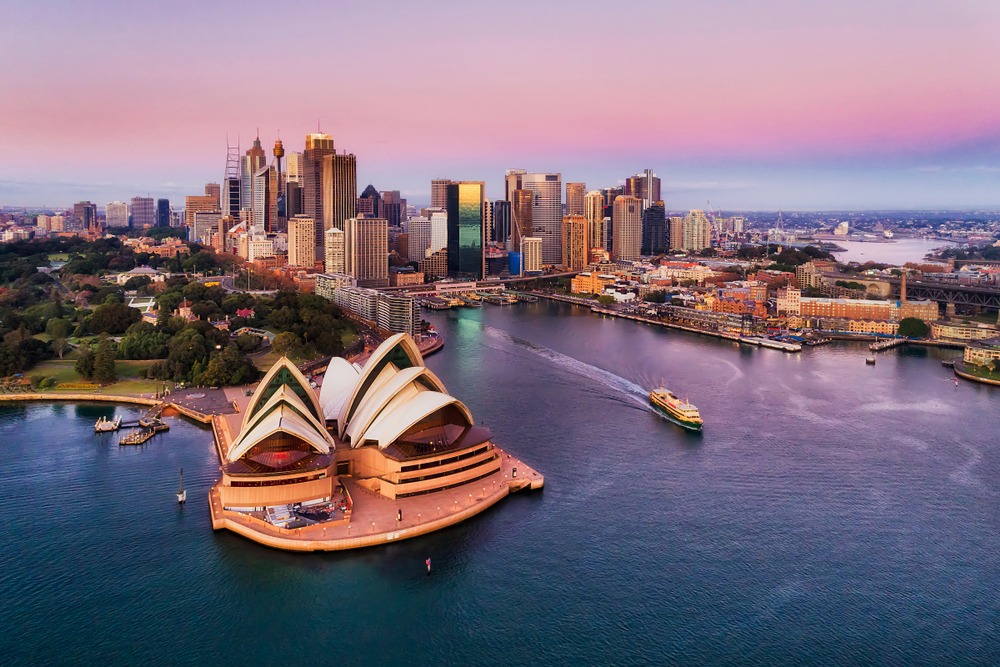
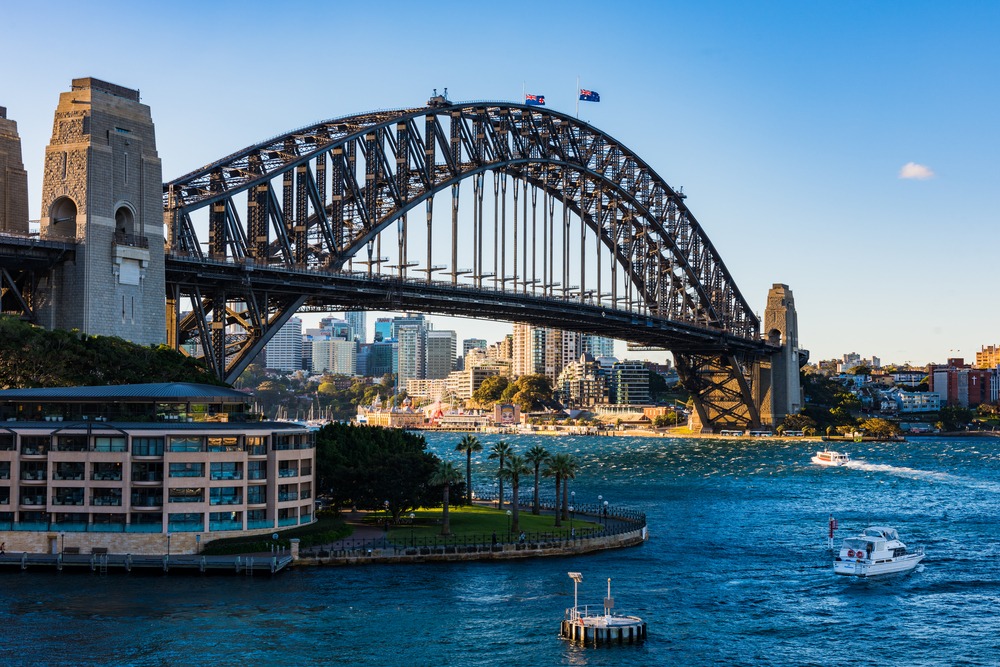
The perimeter of the building is freely accessible and offers varied perspectives on the shells, the Harbour Bridge, and the port. The best angles are found on the east side, from the steps of the Royal Botanic Garden.
Practical Information
The exterior of the site is accessible at all times and free. Guided tours and performances are paid, with rates varying greatly depending on format and show. The foyer has bars and restaurants open during the day and evening. Ticketing is managed online via the Sydney Opera House official website. Allow 1 hour for a simple walk around the building, 1 to 2 hours for a guided tour, and the performance duration for a show.
When to Visit
The Sydney Opera House operates year-round. The cultural season is busy from February to November, with major productions from Opera Australia and the Symphony Orchestra. Australian summer (December–February) features outdoor events on the Forecourt and the Vivid Sydney festival in May–June, during which the shells serve as screens for large light projections. To photograph the building, early morning and late afternoon offer the best light.
How to Get There
- Train: Lines T2 and T3 serve Circular Quay station, a few minutes' walk from the Opera House.
- Ferry: All Sydney Ferries converge at Circular Quay. Approaching by water gives a direct view of the shells.
- Bus: Many lines connect city neighborhoods to Circular Quay.
- On Foot: From the CBD, allow 10 to 15 minutes walking along Circular Quay.
Nearby Attractions
The Opera House lends itself to a walking route through historic central Sydney:
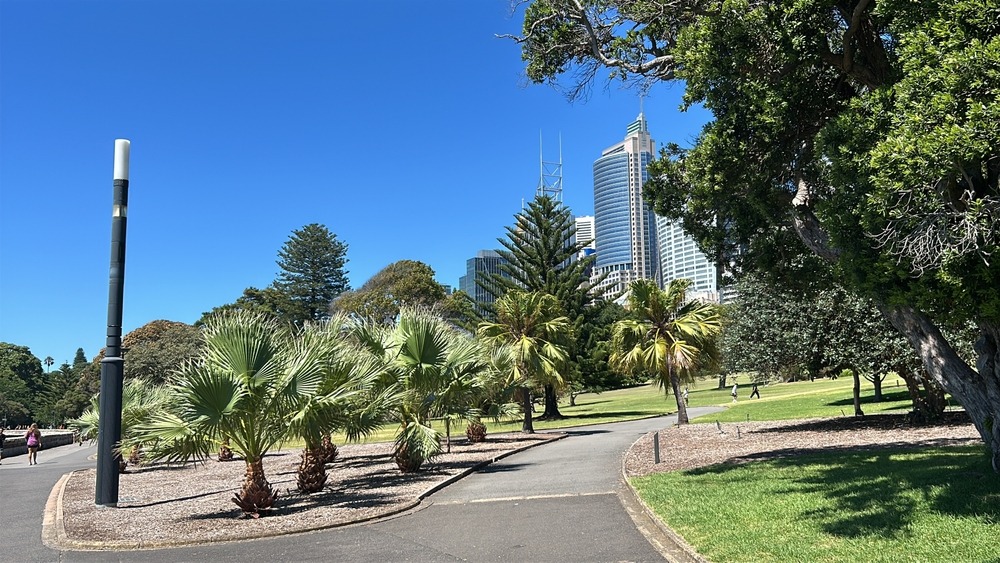
- Royal Botanic Garden: just to the east, with Mrs Macquarie's Chair viewpoint for the classic photo of the shells with the Harbour Bridge.
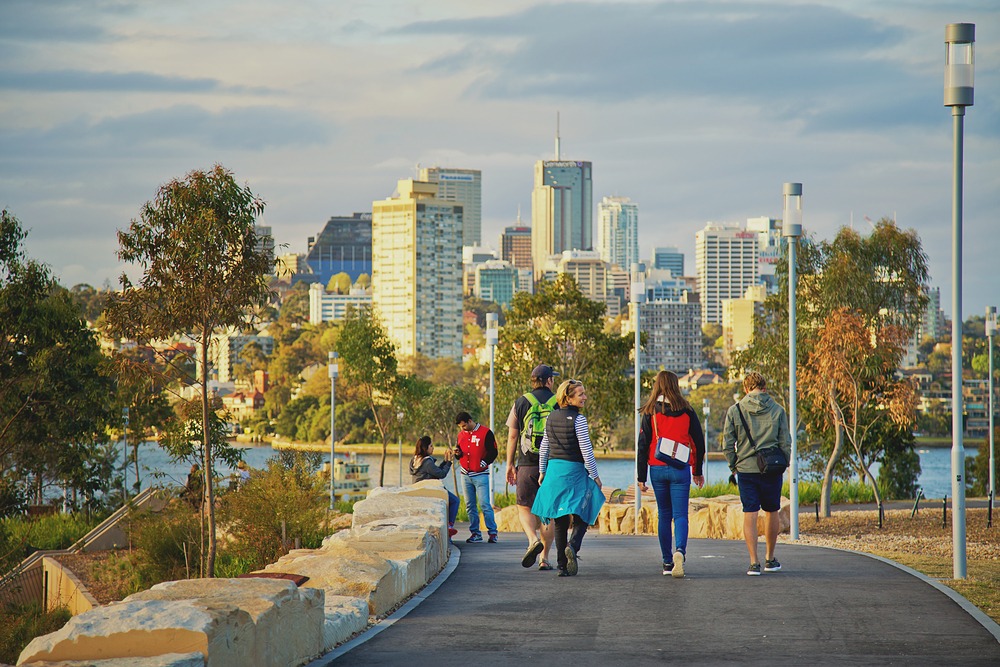
- Barangaroo Reserve: waterfront promenade on the west side of the CBD.
- Darling Harbour: lively basin lined with museums, accessible by ferry or on foot.
- Australian Museum: to deepen your visit with natural and cultural history of Australia.
Frequently Asked Questions
Frequently asked questions
Plan Your Trip
To incorporate Sydney Opera House into a broader itinerary covering the East Coast, Outback, and the Great Barrier Reef, see our tours in Australia.
Nearby
Interested in this visit?
We can include it in your personalised itinerary.