Uluru
Uluru
Sandstone monolith of 346 m in the heart of the Outback, sacred site of the Anangu and UNESCO-listed: everything you need to prepare your visit to Uluru and Kata Tjuta.
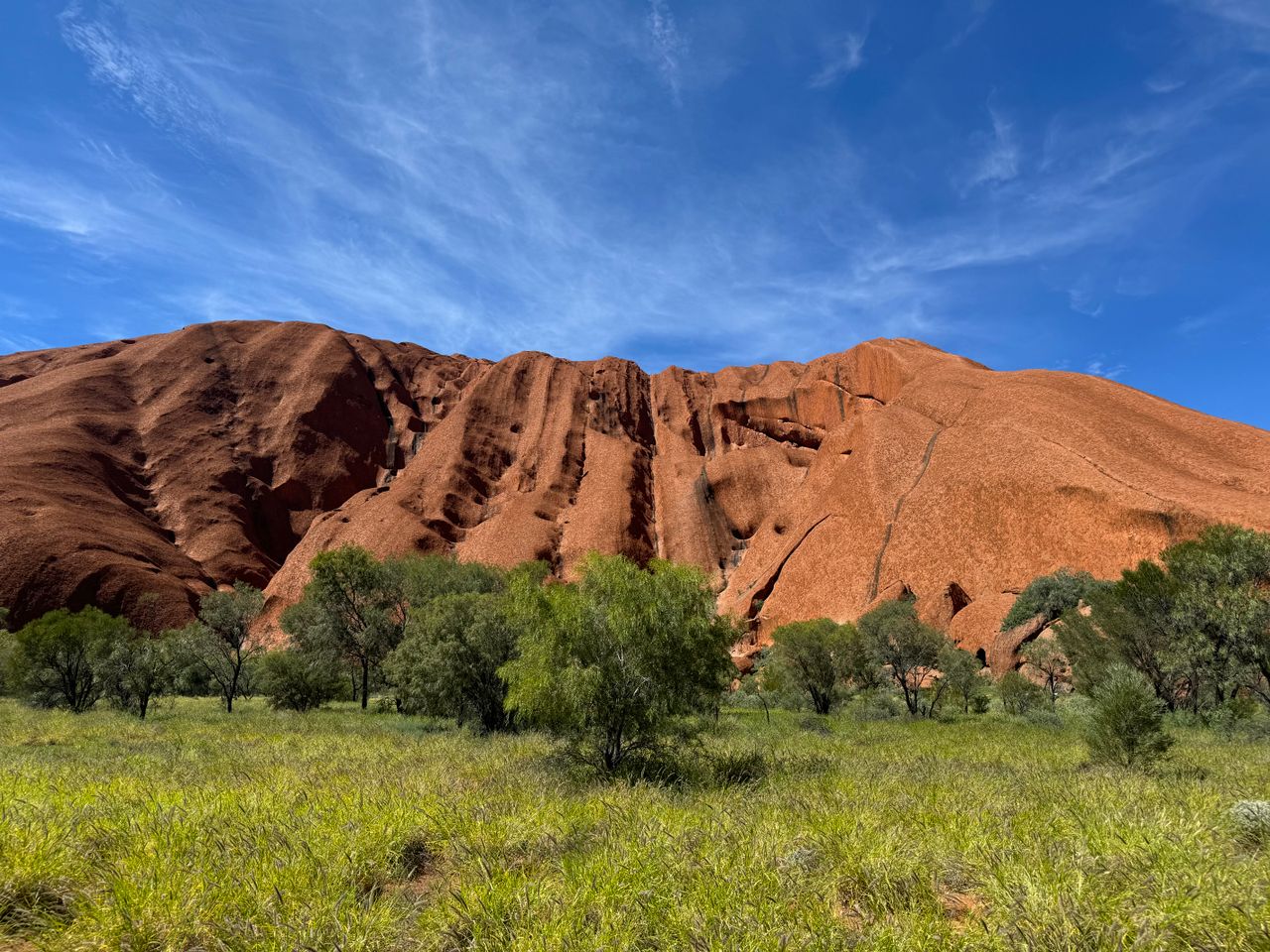
In the heart of Australia's Northern Territory, Uluru rises in the middle of the Outback like an absolute landmark. The sandstone monolith, also called Ayers Rock, measures 9.4 km in circumference and 346 m in height, making it the world's largest sandstone monolith. A sacred site for the Aboriginal Anangu people and inscribed on the UNESCO World Heritage List, it forms the central point of Uluru-Kata Tjuta National Park.
Why visit Uluru
Uluru brings together three dimensions rarely found on a single site: spectacular geology, living cultural significance, and a preserved desert ecosystem. Its colours shift from brown to orange, then red to grey depending on the light of day, which explains the importance placed on sunrise and sunset viewing. The site is managed jointly by the traditional Anangu owners and Parks Australia, resulting in signage and trails designed to respect sacred areas.
History and cultural significance
Uluru's geological origins date back approximately 500 million years, to when the Australian continent was taking shape. The visible monolith today represents only a fraction of a rock formation that extends kilometres beneath the surface.
For the Anangu Aboriginal people, the traditional owners of the site, Uluru is a sacred place directly linked to the Tjukurpa, the Dreaming, which encompasses creation narratives, customary law, and social rules. According to tradition, Uluru functions as the hub of a wheel whose spiritual lines radiate across the entire continent, and the Anangu ancestors used it to record births, conflicts, and deaths.
This sacred dimension explains a major decision: since October 2019, climbing the rock has been officially prohibited. Visitor activity has since shifted to walking circuits around the base and guided cultural experiences, in line with the longstanding wishes of the Anangu community.
What to see and do
Walking trails around the rock
Six walking paths encircle Uluru and allow you to complete the full loop or target specific sections. The base trail, the most comprehensive, follows the entire circumference. Other shorter routes lead to the Mala tribe caves, ancestors of the Anangu, where rock paintings and natural shelters tell the story of traditional desert life.
The Uluru-Kata Tjuta Cultural Centre, nearby, serves as a useful starting point to understand the inma (ceremonial songs), Tjukurpa narratives, and the daily life of the Anangu before experiencing the site itself.
Field of Light and nighttime activities
British artist Bruce Munro's Field of Light installation deploys approximately 50,000 solar lights in the desert near the rock. The bulbs illuminate at dusk and cover an area equivalent to several football fields. Open-air dinners are offered alongside, with views of Uluru at twilight.
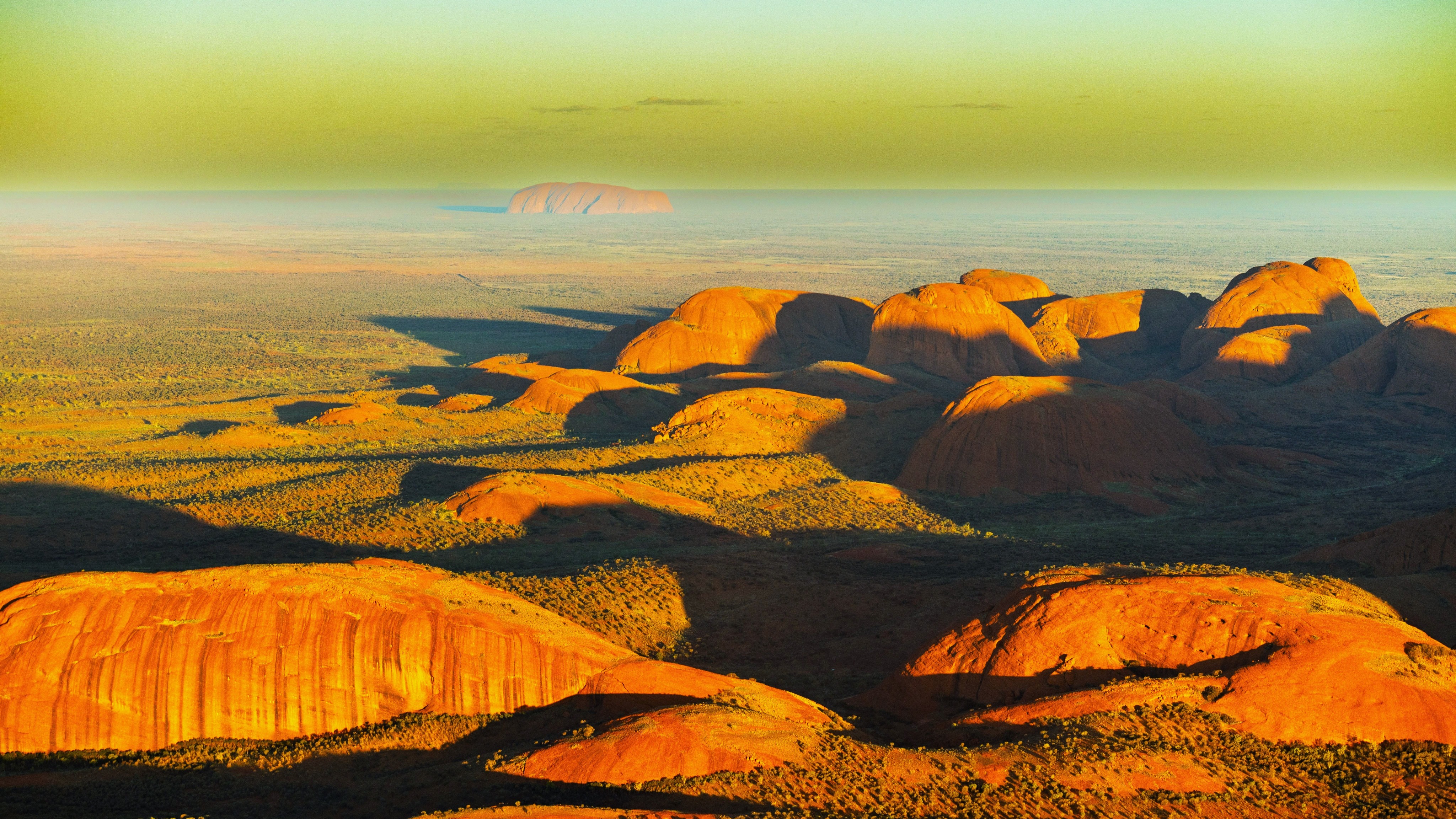
Other options are available: motorbike or camel excursions, guided sunrise outings, panoramic helicopter or light aircraft flights to grasp the scale of the site from the air.
The Kata Tjuta massif
About 30 minutes' drive from Uluru, the Kata Tjuta massif, formerly called The Olgas, comprises 36 arkose domes as inselbergs. The name means "many heads" in the Pitjantjatjara language. Two marked trails are open to the public — Walpa Gorge and Valley of the Winds — while other areas remain closed due to their sacred nature.
Park wildlife
Uluru-Kata Tjuta National Park is home to notable desert biodiversity:
- over 70 reptile species, including the thorny devil (Ngiyari) and the blue-tongued lizard (Lungkata);
- 21 indigenous mammals, among them the Mala wallaby-hare and the brush-tailed Mulgara, a relative of the Tasmanian devil;
- over 170 bird species.
When to visit
Uluru and its park are accessible year-round, but climate largely determines the rhythm of visits. During the Australian summer (December-February), daytime temperatures frequently exceed 40°C, and insects are abundant. The recommended period runs from May to October, with milder and sunnier days. Winter nights can, however, be very cold: pack warm clothing for sunrise and sunset outings, which remain the best times to observe the monolith's colour changes.
How to get there
Ayers Rock Airport (Connellan), located about 20 km north of the rock, receives domestic flights from major Australian cities. Shuttles provide connections to accommodation in Yulara, the park's service village.
The other entry point is Alice Springs, 450 km to the northeast, roughly 5 hours' drive away. The route uses the Stuart then Lasseter highways, both sealed. Service stations dot the route but remain spaced out: fill up whenever possible. No railway service reaches Uluru directly.
Practical information
- Park entry: a multi-day pass is required to enter the national park; moderate rate, usual free entry for children below a certain age (verify before departure).
- Duration of visit: allow a minimum of 2 days to combine Uluru, Kata Tjuta, and a sunset; 3 days allows you to add Field of Light and a longer walk.
- Accommodation: all lodging (hotels, camping) is concentrated in the Yulara complex, outside the park.
- Respect for the site: do not photograph areas marked as sacred and do not climb on the rock.
Nearby and elsewhere in Australie
If Uluru is part of a broader itinerary across the Outback or towards the tropical north, several stops can enrich your journey: Atherton Tablelands and Kuranda State Forest in Queensland for rainforest landscapes, Magnetic Island for the coast, or Crocosaurus Cove and the Mindil Beach Sunset Market in Darwin for the tropical north.
Frequently asked questions
Frequently asked questions
No. Climbing the rock has been officially prohibited since October 2019, at the request of the traditional Anangu owners. Visitors can, however, use the six trails that circle it.
May to October, which corresponds to the Australian winter. Daytime temperatures are milder than in summer, when they often exceed 40°C. Nights remain cold during this period; plan for warm layers.
Two to three full days allow you to combine Uluru, Kata Tjuta, a sunrise or sunset, and the Field of Light installation, without rushing.
By car, allow about 5 hours via the Stuart then Lasseter highways (450 km). Tour buses also operate the route. No train service reaches the site.
Yes, the Kata Tjuta massif is about 30 minutes' drive from Uluru, within the same national park. It is entirely possible to visit both sites on the same day.
Planning your trip
Uluru fits naturally into an itinerary combining the Red Centre and other regions of the country. To structure your stay with an English-speaking guide and a tailor-made programme, consult our Australie journeys.
Interested in this visit?
We can include it in your personalised itinerary.