Tasmania
A temperate island at the continent's southern edge, Tasmania brings together ancient rainforests, endemic wildlife and penitentiary heritage across 8 to 12 days by car.
Tasmania, separated from the mainland by Bass Strait, spans 68,000 km², roughly the size of Ireland. Our team proposes it as a destination in its own right or as an extension to an East Coast circuit, because the character of the place bears no resemblance to the rest of Australia: temperate wet forests, altitude plateaus swept by westerly winds, granite coastlines and port villages born from 19th-century penitentiary colonisation.
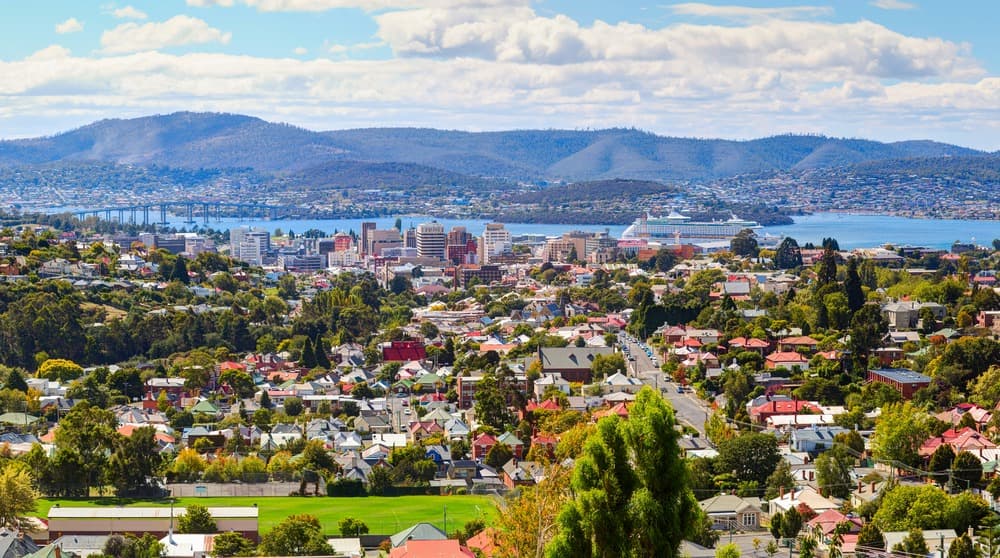
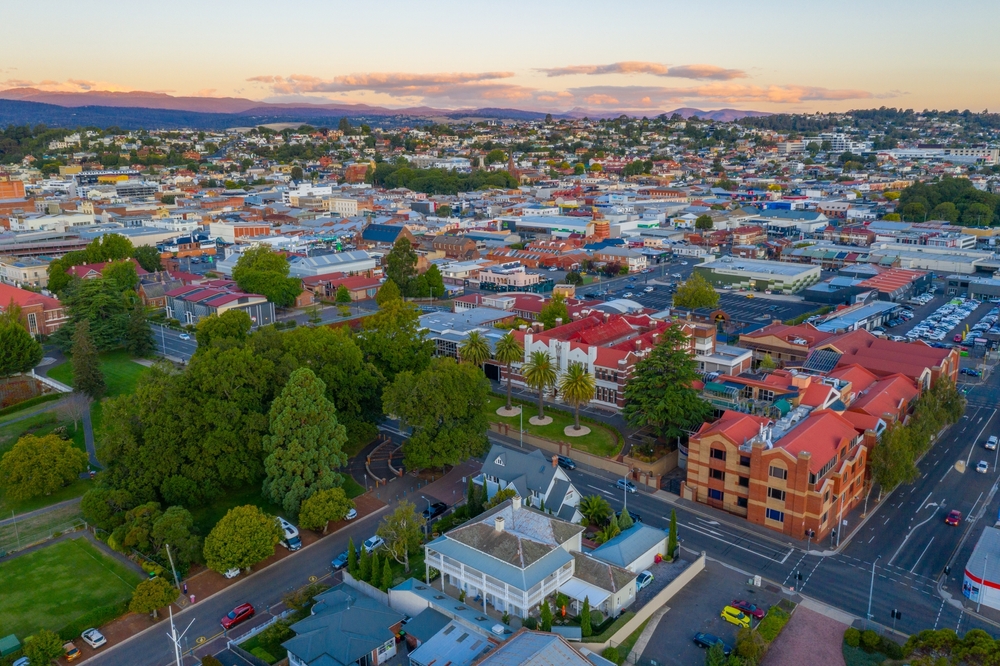
Hobart, the capital, is home to 240,000 people and revolves around Sullivans Cove harbour and Mount Wellington, which peaks at 1,271 metres. Salamanca Market, held every Saturday morning in the 1830s sandstone warehouses, remains the gathering place for the island's producers: Bruny Island cheeses, Tasman Peninsula oysters, whisky from Cambridge distilleries. Twenty minutes from the city centre, MONA (Museum of Old and New Art) is carved into the Berriedale cliff face and showcases David Walsh's private collection—one of the country's most singular museum offerings.
To the north, Launceston and the Tamar Valley concentrate the wine estates, predominantly pinot noir and chardonnay, on volcanic soils. Further west, the Tarkine and Franklin-Gordon cover nearly a quarter of the island in temperate rainforests listed as World Heritage sites. This is where Huon pines grow—endemic conifers, some specimens over 2,000 years old. The Franklin River remains one of Australia's last great wild rivers, navigated by rafting over 8 to 10 days by the specialist operators we work with.
Wildlife alone justifies a visit. The Tasmanian devil, an endemic carnivorous marsupial now threatened by transmissible facial tumour disease, can be spotted in Cradle Mountain and Bonorong sanctuaries, but also in the wild in the north-west. Wombats, Bennett's wallabies, echidnas and pademelons emerge at dusk in national parks. On the water, Bruny Island and Eaglehawk Neck offer boat trips to observe fur seals, dolphins and, between May and July, humpback whales migrating.
Palawa Aboriginal culture, long denied then erased by colonial history, is regaining visibility through projects like wukalina Walk, a four-day guided trek across the ancestral territory of the north-east, led by descendants of surviving communities. Gastronomy follows the same logic of local rootedness: farmed salmon from Macquarie Harbour, Flinders Island lamb, scallop pies in Bicheno, Cascade beer brewed since 1824 (Australia's oldest operating brewery).
Tasmania's economy rests on specialised agriculture (Huon Valley cherries exported to Asia), fishing, tourism and a controversial forestry sector. The island increasingly attracts retirees from the mainland fleeing Sydney or Melbourne's summer heat, slowly transforming south-east towns like Cygnet and Geeveston.
Must-see
Cradle Mountain and Overland Track. Six days of walking between Cradle Mountain and Lake Saint-Clair, across altitude plateaus, myrtle forests and glacial lakes. Short version available as a day walk around Dove Lake.
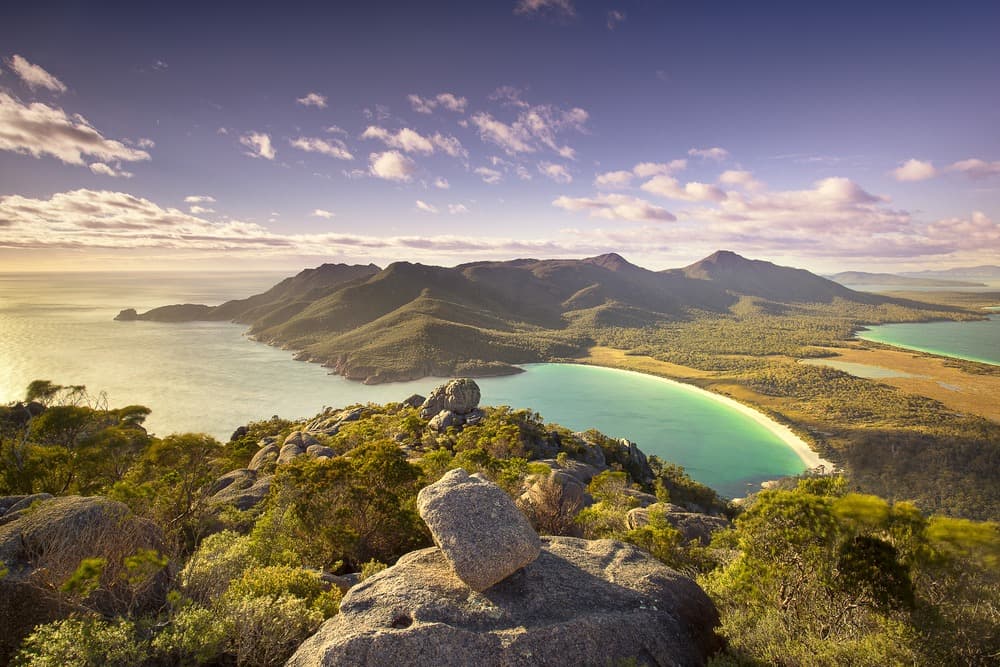
Wineglass Bay, Freycinet National Park. One and a half hours climbing to the lookout over the perfectly arced cove, then descent to the sand. Pink granite of the Hazards in the background, water at 16 °C in summer.
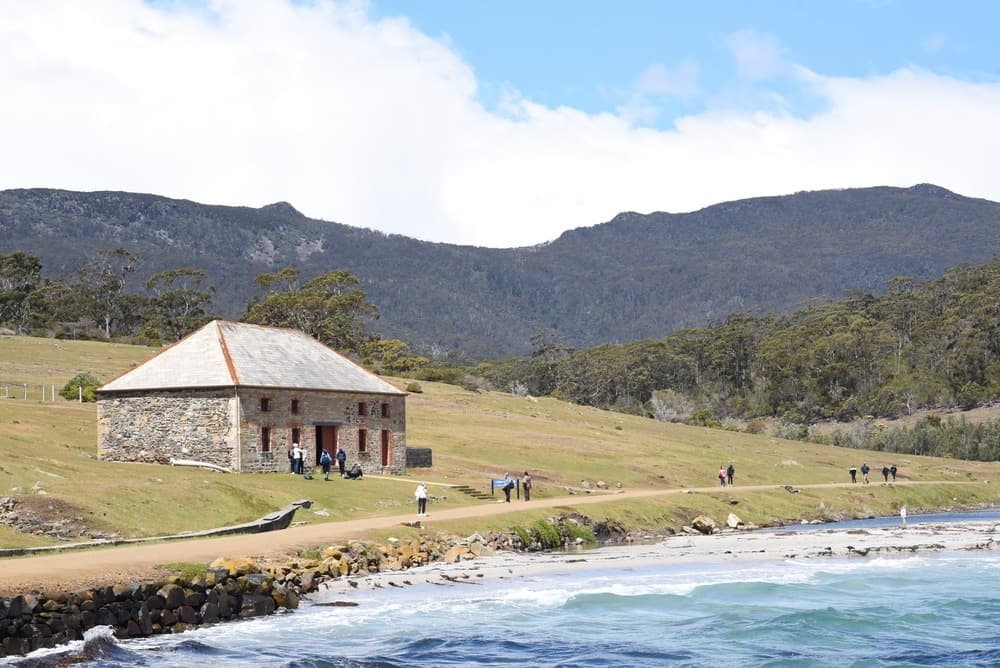
Port Arthur and Tasman Peninsula. Former penitentiary from 1830 transformed into a memorial site, with sandstone ruins overlooking the bay. Dolerite cliffs 300 metres high at Cape Pillar and Tasmans Arch marine tunnel nearby.
MONA, Hobart. Semi-underground private museum accessible by ferry from Brooke Street Pier. Contemporary artworks and Egyptian antiquities mixed within an underground setting across three levels carved into sandstone.
Bruny Island, south-east. A day trip by ferry from Kettering to an island with two lobes connected by a sand isthmus. 1838 lighthouse, artisan cheese factory, oyster tasting at Get Shucked and observation of endemic white wallabies.
When to visit
The best period for Tasmania runs from December to March, the Australian summer, with temperatures of 20 to 25 °C in Hobart and long daylight until 9pm. High-altitude trails at Cradle Mountain or Walls of Jerusalem National Park are then clear of snow. January and February remain the driest months, around 45 mm monthly rainfall on the east coast, but also the busiest (bookings essential 3 to 6 months ahead for the Overland Track and lodges).
Autumn, April to May, brings the colours of fagus (Australia's only endemic deciduous tree) in high altitude parks, towards late April. Winter, June to August, drops to 3-12 °C with snow on summits and heavy rain in the west (Strahan receives over 2,000 mm annually, especially in winter). It is, however, peak season for southern auroras visible from the south coast, and full whisky and fireside season. Spring (September-November) is windy and unstable, best suited to flexible travellers.
Practical advice
We recommend 8 to 12 days for a coherent self-drive circuit, with entry via Hobart airport (direct flights from Melbourne in 1h15 and Sydney in 2h). A classic circuit connects Hobart, Tasman Peninsula, Freycinet, Bay of Fires, Launceston, Cradle Mountain and return via the central Highlands, totalling roughly 1,500 km. In 5-6 days, it's better to focus on half the circuit (south-east and east coast only). Distances appear short on maps but winding roads slow progress: allow 4h30 actual driving from Hobart to Cradle Mountain.
Tasmania naturally combines with Great Ocean Road & Victoria (Melbourne-Hobart flight) for a 3-week southern circuit, or as an extension to an East Coast & Sydney stay for travellers sensitive to heat. Comfort levels range from youth hostels to high-end lodges like Saffire Freycinet, with solid offerings of cottages and farm stays in between. The region suits hikers particularly well, gastronomy and wine enthusiasts, families with teenagers for the wildlife, and contemplative travellers who embrace changeable weather.